Davos in January always feels like a controlled experiment in global power. Snow, security perimeters, black SUVs, conversations that quietly shape markets. But at the 56th Annual Meeting of the World Economic Forum in 2026, something subtle and far more consequential happened. Beneath the predictable headlines about geopolitics and AI regulation, the real pivot was toward something deeper and more strategic: the human brain as the central economic asset of the next era.





Inside multiple sessions connected to the World Economic Forum, the McKinsey Health Institute and leading academic institutions, a new language entered the room. It was not about faster models or larger data centers. It was about cognitive resilience, brain health and adaptive intelligence. The shift became explicit with the launch of the Global Brain Economy Initiative by Rice University at Davos, led by Dr. Harris Eyre, Senior Fellow in Brain Capital at Rice. Eyre framed the concept clearly: brain capital is the combination of brain health and brain skills, and it represents the foundational economic asset of the 21st century. This was not abstract philosophy. The initiative was aligned with the World Economic Forum and McKinsey Health Institute report titled The Human Advantage: Stronger Brains in the Age of AI, presented during the meeting. That report argued that in a world increasingly shaped by artificial intelligence, competitive advantage depends on strengthening cognitive capacity, emotional regulation, creativity and adaptability across populations.
What made this moment remarkable was who was paying attention. According to coverage by Health Policy Watch during the Forum week, discussions around brain capital involved voices such as Bill Gates, Dr. Tedros Adhanom Ghebreyesus, Director General of the World Health Organization, and John-Arne Røttingen, CEO of Wellcome. When global health leaders and major philanthropists converge around the idea that brain health is macroeconomic infrastructure, the signal is clear. Longevity is no longer framed as an anti aging fantasy. It is framed as productive cognitive lifespan. The economic system is beginning to treat mental resilience and cognitive adaptability as measurable drivers of growth.
Parallel to this, the AI conversation at Davos felt more mature and less euphoric than in previous years. In official World Economic Forum sessions on deploying innovation responsibly at scale, leaders emphasized that the real bottleneck is not invention but integration. The Forum’s own coverage of these discussions stressed that innovation must be embedded within governance, institutional capacity and workforce transformation. Kristalina Georgieva, Managing Director of the International Monetary Fund, reinforced this reality during Davos conversations covered by major financial press, warning that up to 60 percent of jobs in advanced economies could be affected by AI through transformation or displacement. The implication was not apocalyptic but strategic. Societies that invest in cognitive reskilling and emotional adaptability will outperform those that simply deploy algorithms.
There was also a strong undercurrent around human creativity as a strategic differentiator. At side gatherings such as Brain House, organized in collaboration with the Davos Alzheimer’s Collaborative, and in cross sessions involving AI and health leaders, the discussion repeatedly returned to one idea: artificial intelligence amplifies patterns, but human beings generate meaning. Erwin Böttinger, CEO of Wyss Center Geneva and Professor of AI in Human Health, spoke about the intersection of neuroscience and machine intelligence, highlighting how AI systems can support but not replace complex human judgment and creative synthesis. This was echoed in the broader WEF narrative that human led, AI powered systems will define the next wave of economic organization.
What I found most interesting, standing in rooms where central bankers, biotech founders and AI executives intersected, was the quiet consensus forming around a new hierarchy of value. Capital still matters. Infrastructure still matters. But cognitive capacity is moving to the top of the stack. The McKinsey and World Economic Forum report made this explicit by positioning strong brains as the decisive advantage in the age of AI. It reframed investment in mental health, education, neurotechnology and lifelong learning as growth strategies rather than social spending.
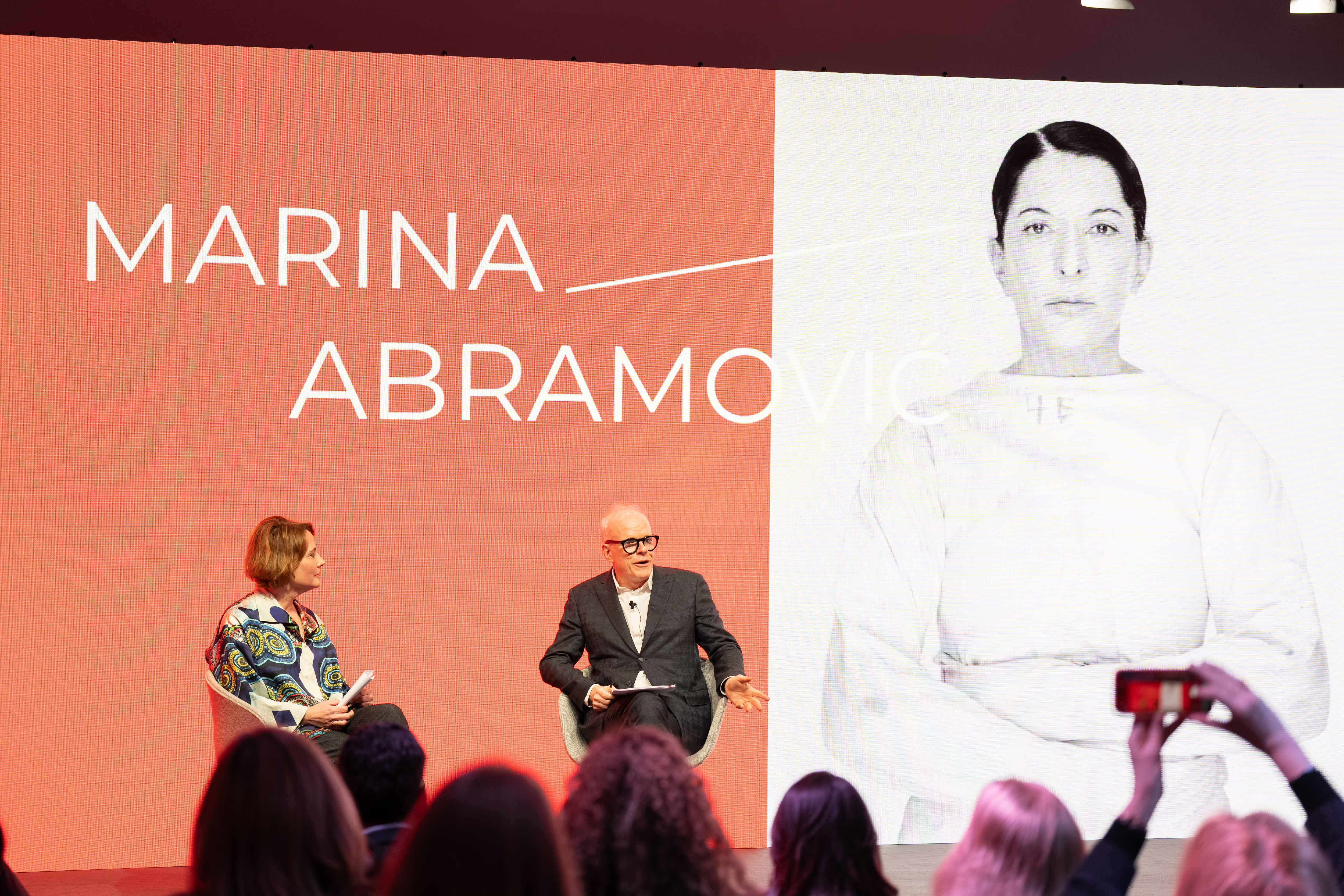
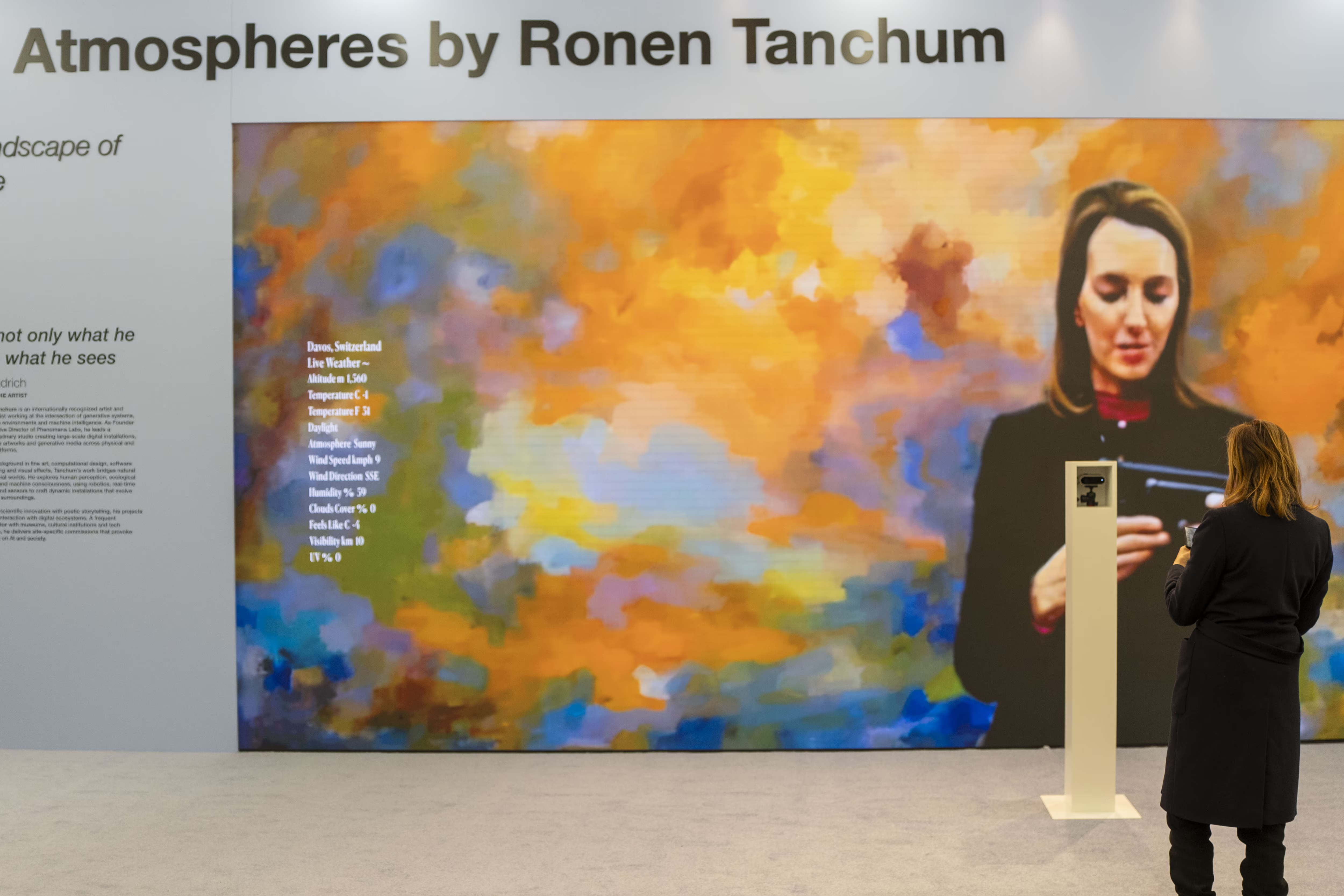
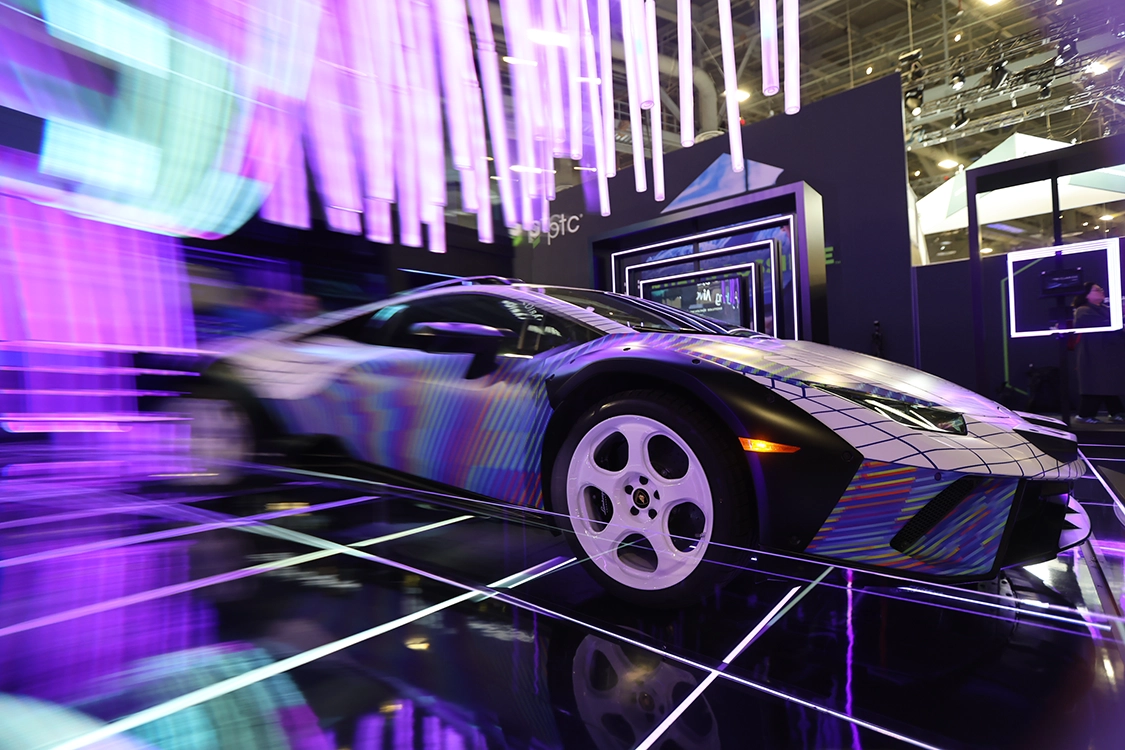
Another moment that crystallized this tension between machine output and human presence was an AI generated visual installation by artist and technologist Ronen Tanchum, presented during the week in Davos. The work used generative systems trained on environmental and socio economic datasets to produce a continuously evolving immersive landscape, effectively turning abstract global risk signals into a living visual organism. What made it powerful was not the algorithmic sophistication alone, but the framing: data was not displayed as charts but experienced as atmosphere. In parallel, Marina Abramović was involved in high level cultural programming connected to the Forum’s exploration of human consciousness and endurance, reinforcing a central idea echoed across sessions. Technology can simulate, accelerate and recombine, but the depth of human presence, attention and embodied awareness remains irreducible. In a week dominated by AI rhetoric, these artistic interventions made a sharper point than most panels: the future will not be decided by computation alone, but by how deeply we understand and cultivate human perception.
Davos 2026 therefore did not feel like a tech summit obsessed with silicon. It felt like a recalibration. The future is not simply artificial intelligence scaling across industries. The future is the race to enhance and protect human intelligence, creativity and resilience while AI accelerates everything around it. The Forum’s theme of dialogue was visible, but beneath it was something more pragmatic. Governments, corporations and research institutions are beginning to align around the idea that the brain is economic infrastructure.
For someone building at the intersection of human centered AI, emotional data and wearable technology, this shift is not theoretical. If brain capital becomes a recognized economic metric, then technologies that measure stress, enhance focus, support emotional regulation and extend cognitive longevity move from niche wellness tools to strategic assets. The center of gravity is moving. Davos made that visible.
The headline story of 2026 was not that AI will change the world. Everyone already knows that. The real story was that global leaders are starting to understand that the limiting factor in the age of AI is not computing power. It is human cognitive power. And for the first time at Davos, that was treated not as a soft theme, but as hard economics.