
This invitation came full circle.
We crossed paths with Project Jacquard through our long-standing network in China, the same partners who were involved in curating and supporting parts of Levi’s production ecosystem. That layer of the industry, where materials, manufacturing constraints, and scale meet, is often where real innovation either becomes viable or quietly dies. In this case, it became the bridge that brought us into the project’s orbit.


The launch was led by Google ATAP, one of the most interesting units inside Google. ATAP, or Advanced Technology and Projects, operates almost like an internal skunkworks. The mandate is simple and brutal: build things that shouldn’t exist yet. Some never ship. Some redefine categories. ATAP has been behind projects that blend hardware, materials science, and human interface design in ways most product teams never attempt.
Project Jacquard was one of those bets.
The collaboration with Levi’s was not about creating a flashy gadget. The goal was more subtle and more ambitious: make fabric itself an interface. Conductive yarns were woven directly into denim, allowing touch gestures on the sleeve to control music, navigation, and calls. No screens. No visible electronics. Just clothing behaving intelligently.
What impressed me wasn’t the demo. It was the constraints.
The jacket had to feel like a real Levi’s jacket. It had to age well, be washable, handle weather, and survive daily use. Technology was treated as a material, not a feature. Levi’s brought deep cultural knowledge of how people wear clothes. ATAP brought an almost obsessive focus on durability, sensing, and interaction design. And behind both, manufacturing discipline was non-negotiable. That’s where our Chinese partners played a quiet but critical role, ensuring the concept could survive contact with reality.


From a wearables perspective, Project Jacquard marked a shift. Away from screens strapped to bodies. Toward environments that respond. Toward interaction that feels closer to habit than behavior.
For me, it reinforced a principle I’ve seen repeat across domains: the most powerful technology is the kind you forget is there. It doesn’t demand attention. It earns trust through reliability.
Project Jacquard wasn’t about the future of fashion. It was about the future of interfaces.


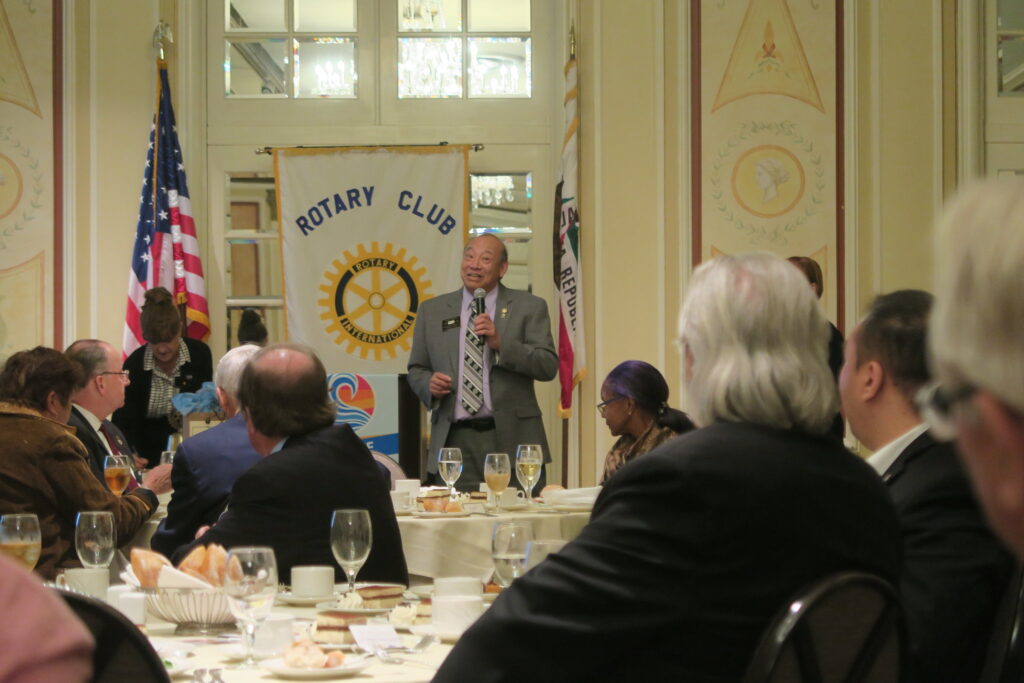
San Francisco felt familiar in the best possible way. A city where ideas are spoken out loud and challenged without ceremony. During that trip, I also had the pleasure of attending a luncheon at the Rotary Club of San Francisco. Long tables, direct conversations, no small talk. I found myself speaking with leaders who had shaped entire layers of Silicon Valley’s development, people who had built infrastructure, companies, and ecosystems rather than chasing headlines. What struck me was their clarity. No mythology. Just hard lessons, long timelines, and a deep sense of responsibility for what technology releases into the world. Sitting there, it felt less like networking and more like listening to a living operating system that continues to quietly run the Valley.