

February 2019 took me back to eWEAR Symposium, held at Stanford University — my second time at Stanford, and this time invited to speak at the annual gathering of minds advancing wearable electronics. The symposium, one of two annual events for the eWEAR community, brings together researchers, corporate innovators, engineers, and designers focused on the next frontier of technology that literally interfaces with the human body.
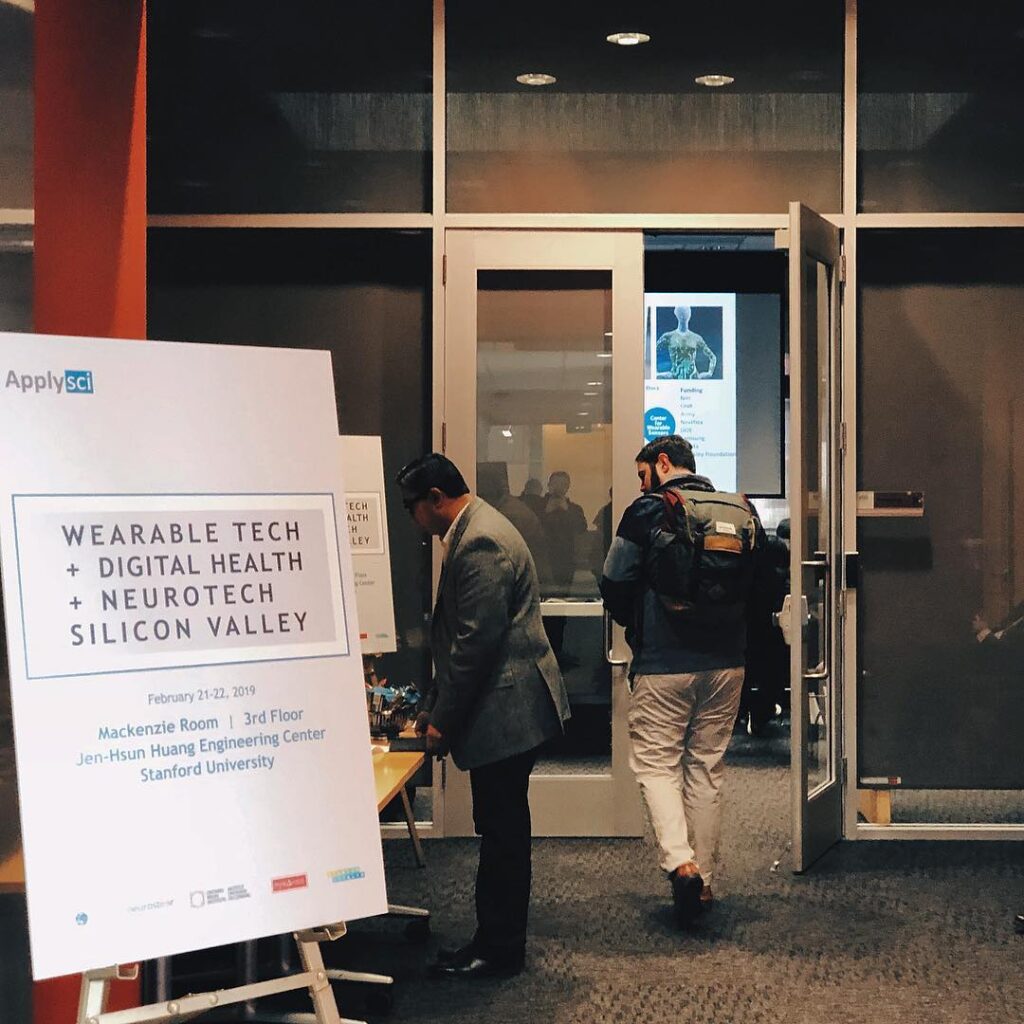
Stanford’s eWEAR initiative sits at the intersection of engineering, materials science, design, and human experience — a space where sensors are not just circuits, but extensions of human perception and action. At the heart of that effort is Angela McIntyre, the Executive Director of the Stanford Wearable Electronics (eWEAR) Initiative. Before Stanford, Angela was a lead industry analyst at Gartner and a technology researcher influencing how wearables would integrate into the Internet of Things, AI, and healthcare. She now fosters collaborations between industry and academia, building bridges that turn abstract research into real-world applications.


The symposium moved beyond demos and hype. It was a full-day exchange of state-of-the-art research and future horizons — from flexible materials that mimic skin to sensors that can guide robotic collaboration with humans, from biometrics for mental health to advanced energy and interface design. The speaker lineup spanned professors breaking new ground in materials and human-machine interaction as well as practitioners pushing wearables toward clinical and commercial reality.
The Stanford campus that November felt like a living lab. Crisp air, leaf-rustle on the Quad, and the quiet pulse of students moving between lectures. Each presentation was immersive — you could hear the material in the room, see its implications on the faces of engineers, and almost feel the future tighten into focus.
Meeting Angela again gave context to how far the field had come and how deeply it’s poised to transform how we think, sense, and act. Conversations over coffee and long hallway walks deepened my understanding of what truly matters in wearable tech: precision without intrusion, integration without spectacle, and systems designed around people, not products.



By the last session, it was clear that wearable solutions are no longer experimental curiosities. They are architectural elements of human experience — sensors that negotiate meaning between body and world, platforms that anticipate rather than react.
Two planes and a few days later, the conference stayed with me like a rhythm — subtle at first, then unmistakably forward-moving.