
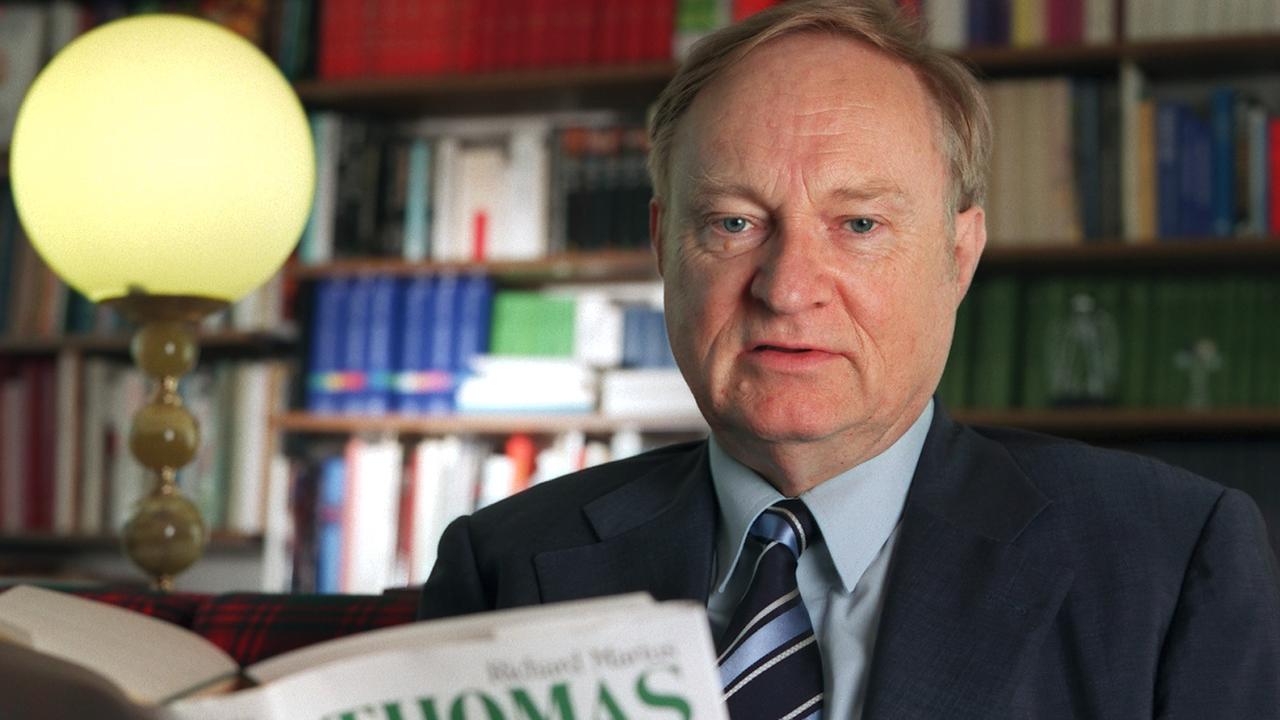
A strange coincidence, a shared name, and the passing of a man who reshaped the debate on death and autonomy
When news broke of the death of Ludwig Minelli at the age of 92 yesterday, I found myself pulled into a conversation I never asked to join. Yet in truth this moment was only the latest chapter of a long, quiet confusion that has followed me for more than two decades.
For over twenty years people have written to me sporadically.
Some messages were curious, others deeply personal, a few even addressed me as if I were him or somehow connected to his work. All of them were born from a simple coincidence that never entirely faded.

His father bore my name.
And in the DACH region, my Italian name Lodovico often becomes Ludwig through habit, paperwork or well-intentioned translation. Working across Germany, Austria and Switzerland, I saw this Germanization happen countless times. The vowel shifts, the consonants align and suddenly a stranger sees a familiar signature.
So when people stumbled across Minelli, Ludwig, Zurich, Liechtenstein, human rights, his organization, his email patterns, my name, my presence in the same geography, they sometimes linked us as if two lives on parallel tracks could be merged by a spelling.
This long trail of misdirected messages created a sense of strange familiarity, a mirror image that never belonged to me yet occasionally reflected back.
The Life of a Man Who Made Death His Cause
Ludwig Amadeus Minelli was born in Zurich on 5 December 1932, the eldest of four children of Lodovico Minelli, a house painter, and Adelheid Minelli. He grew up along the quiet shores of Lake Zurich in Küsnacht, worked in his father’s painting business, then moved into journalism. In 1964 he became Der Spiegel’s first Swiss correspondent, reporting for a decade before turning toward a more personal mission.
The slow decline of his grandmother, and her unfulfilled wish for a peaceful death, reshaped his path. He entered law school, completed his degree in 1981, was admitted to the bar in 1986, and dedicated himself to human rights.

In 1998 he founded Dignitas. The organization soon became central to one of the most difficult ethical questions of our time: the right to die.
Dignitas operated with a clear motto.
To live with dignity. To die with dignity.
Over more than twenty years the group assisted over 3,000 people. Minelli often described the choice of one’s own death as the last human right. He once called suicide a marvelous possibility, insisting that autonomy should not be offered only to the terminally ill.
This conviction earned him admiration and intense criticism.
The Roman Catholic Church condemned him.
Many Swiss citizens questioned his work.
Journalists accused Dignitas of death tourism.
Prosecutors charged him with exploitation in 2018, though he was later acquitted.
Still, Minelli persisted. He believed Dignitas was not an institution of endings but a stand for personal freedom. The organization always began by seeking solutions that favored life. Of those who received a provisional approval, only about twelve percent continued with the final act.
Under Swiss law, the patient must perform the last step unassisted. The organization’s protocol includes written requests, medical information, in-depth evaluations and face to face meetings with doctors. Even then, Minelli admitted that finding physicians willing to participate was often difficult.
He believed the resistance stemmed from more than medicine.
It was, in his view, a question of power.
A Death Consistent With a Life’s Work
On Saturday, in his home in Forch, Minelli died by assisted suicide, following the same principles that shaped his public life. Just days before his ninety third birthday, he exercised the autonomy he had advocated for so long.
He leaves behind daughters, grandchildren, a partner and a country still debating his legacy.
And he leaves small echoes in unexpected places, including decades of messages to someone who happened to share his father’s name and work in regions where Lodovico naturally transformed into Ludwig.
When Identity Shifts By One Letter
There is something quietly surreal in being mistaken for someone else across twenty years, especially someone whose life carried such moral weight. A man who transformed the ethics of assisted dying. A man both criticized and praised. A man whose email patterns or public presence occasionally overlapped with mine through nothing but chance.
These confusions do not create a true connection. Yet they open moments of reflection.
On the fragility of identity.
On the way names migrate between languages.
On the strange crossings that occur when biography and bureaucracy intersect.
I had no part in his work.
But the persistence of these mistaken messages reminded me that our names often travel farther than our stories.
A Note To Those Who Wrote To Me
I was not Ludwig Minelli. I am not related to him.
But I appreciate the human intention behind the messages, however misplaced. They revealed how easily identities can be blurred by a few letters and by the movement between languages.
Sometimes a coincidence is only a coincidence.
Yet even those can illuminate something meaningful.
About dignity.
About autonomy.
And about the delicate ways our lives echo the lives of others without ever touching.