There is the public story, the one that newspapers repeat, institutional, polished, obedient.
And then there is the real story: the improbable chain of people, screens, calls across time zones, digital drafts born at three in the morning on a Balinese terrace, and a metro train inside an Italian depot waiting to be transformed into a cultural machine.
This is that story.
Because before the world saw the first Bitcoin art metro, we had to invent it with Satoshi Gallery.

The day the museum without walls became a node
Years ago, when the idea of the Metro Urban Museum existed only as a sketch in my notebook, it felt like a provocation. A museum with no rooms. No doors. No tickets. A living organism embedded in a city’s bloodstream.
An infrastructure turned into an exhibition space.
An urban network turned into cultural protocol.
Today MUM is real. Active. Expanding. Previous installations are from: Luca Font, Demsky, Joys, Peeta.
And this Bitcoin train is the moment it evolved into its next form.
Bali. Switzerland. Japan. Italy. One continuous production loop.
To bring Valentina Picozzi’s vision to life, we didn’t just install an artwork.
We executed a global operation.

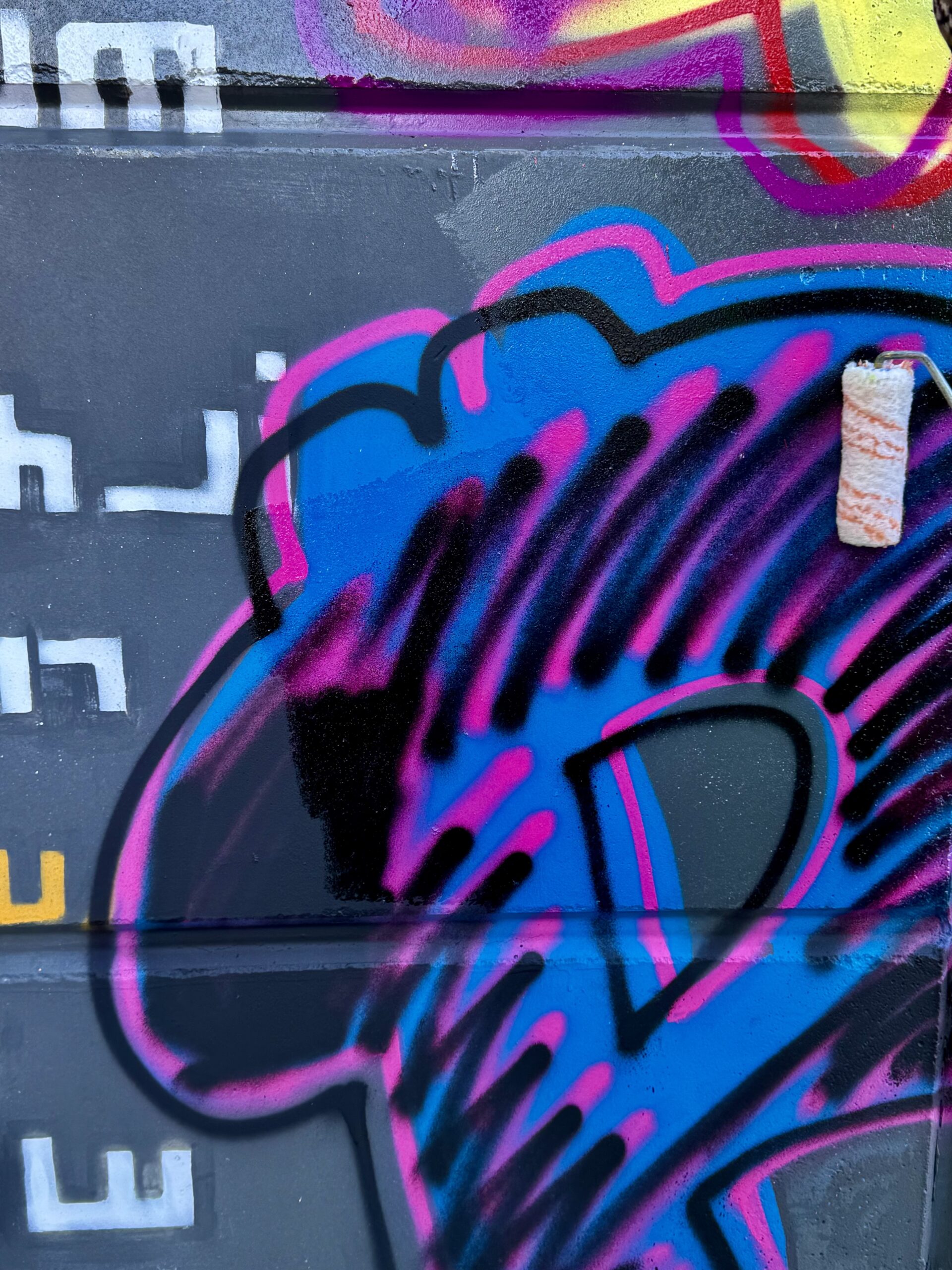
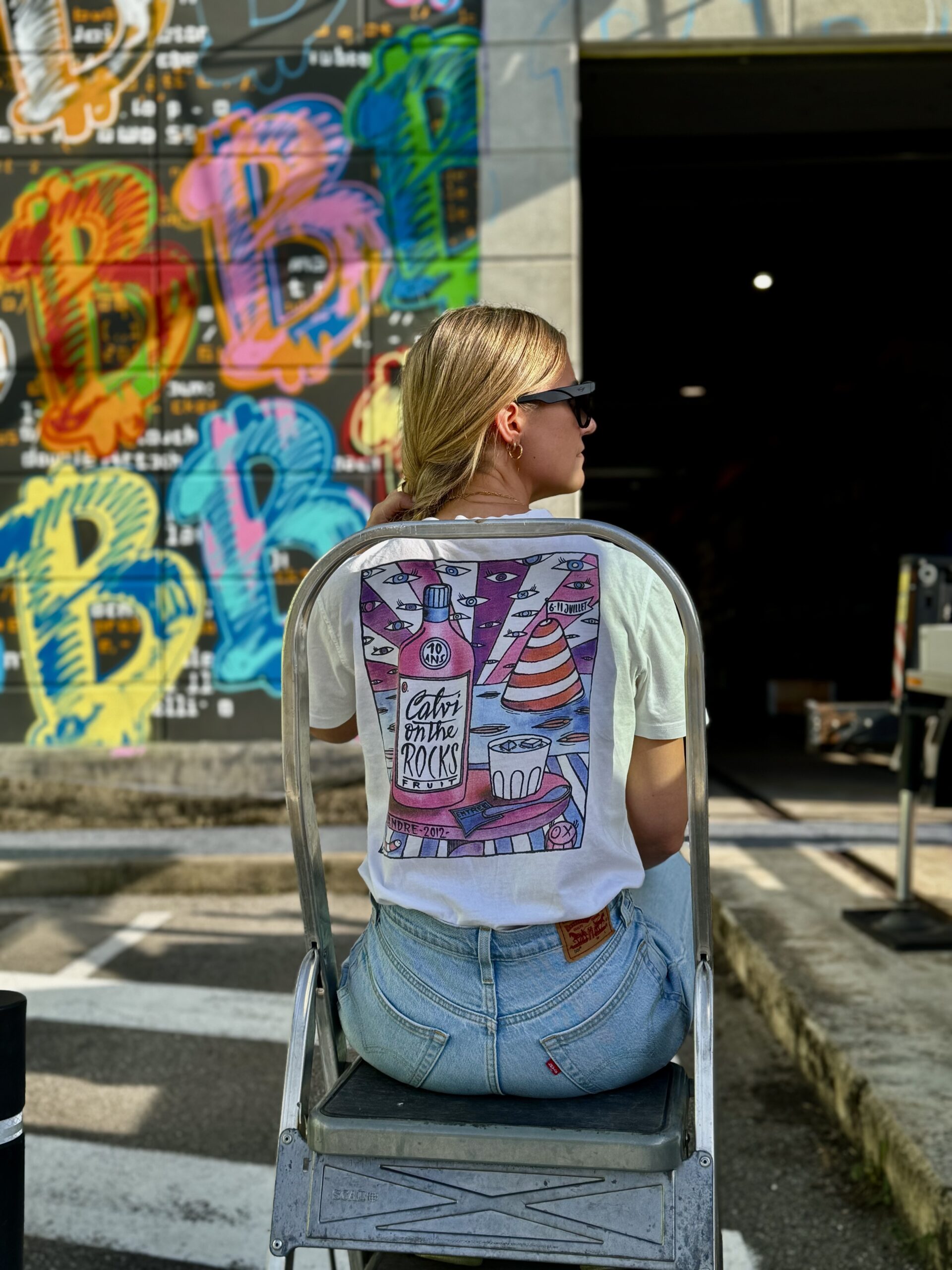
While Valentina shaped the conceptual backbone: the mutated Warhol B, the Satoshi Code flowing like encrypted graffiti, I was messaging with Milan and Bali, turning the digital files into a production-ready system: coordinating printers, plotting every curve of the train, syncing walls and wagons so they would speak the same visual language.
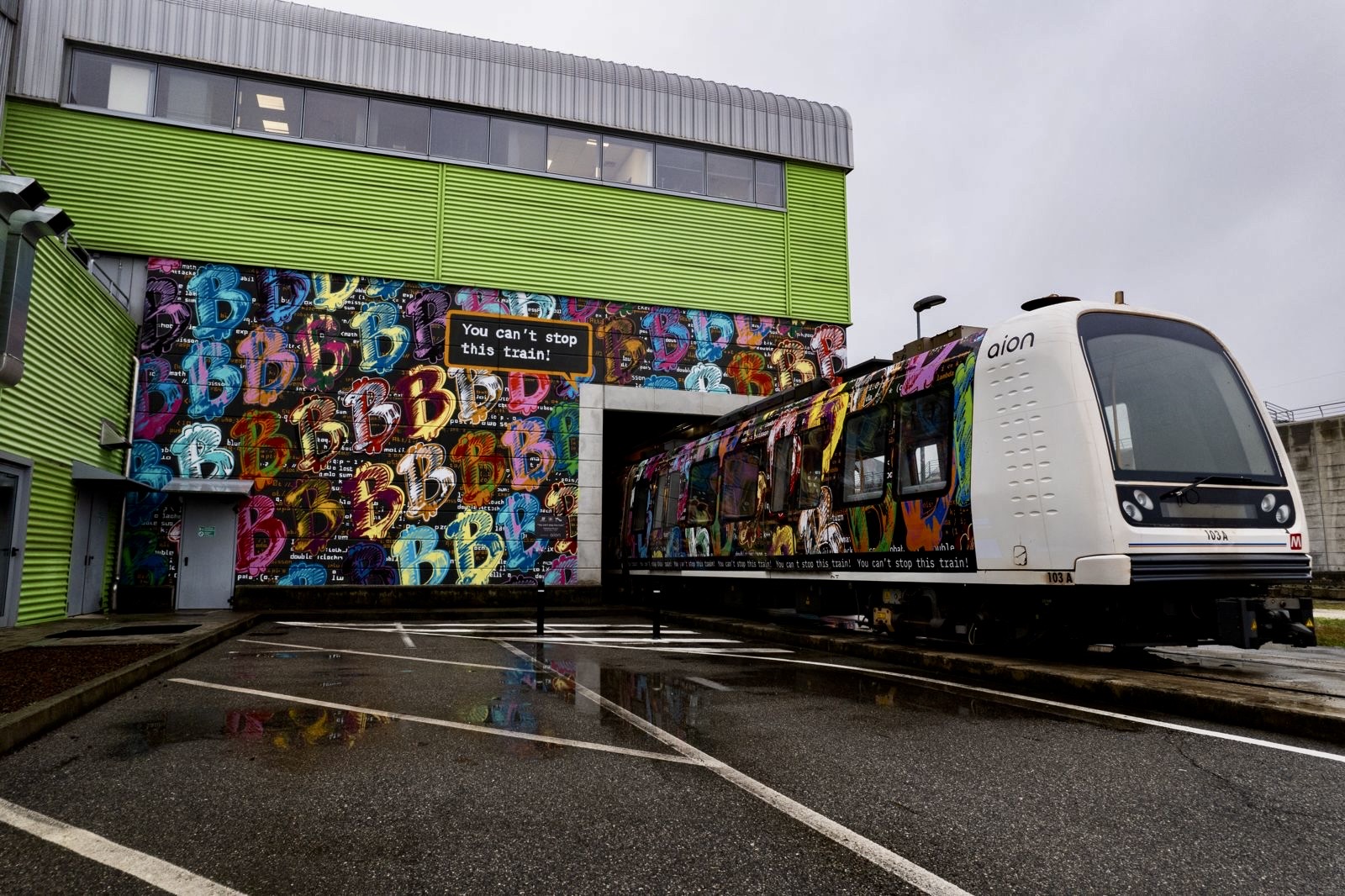
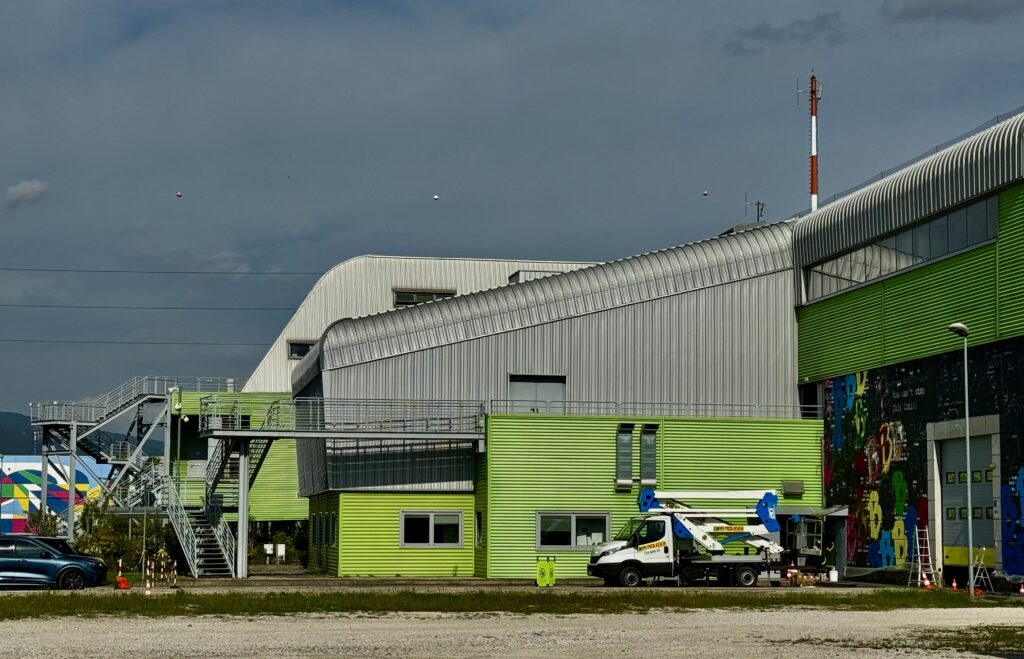
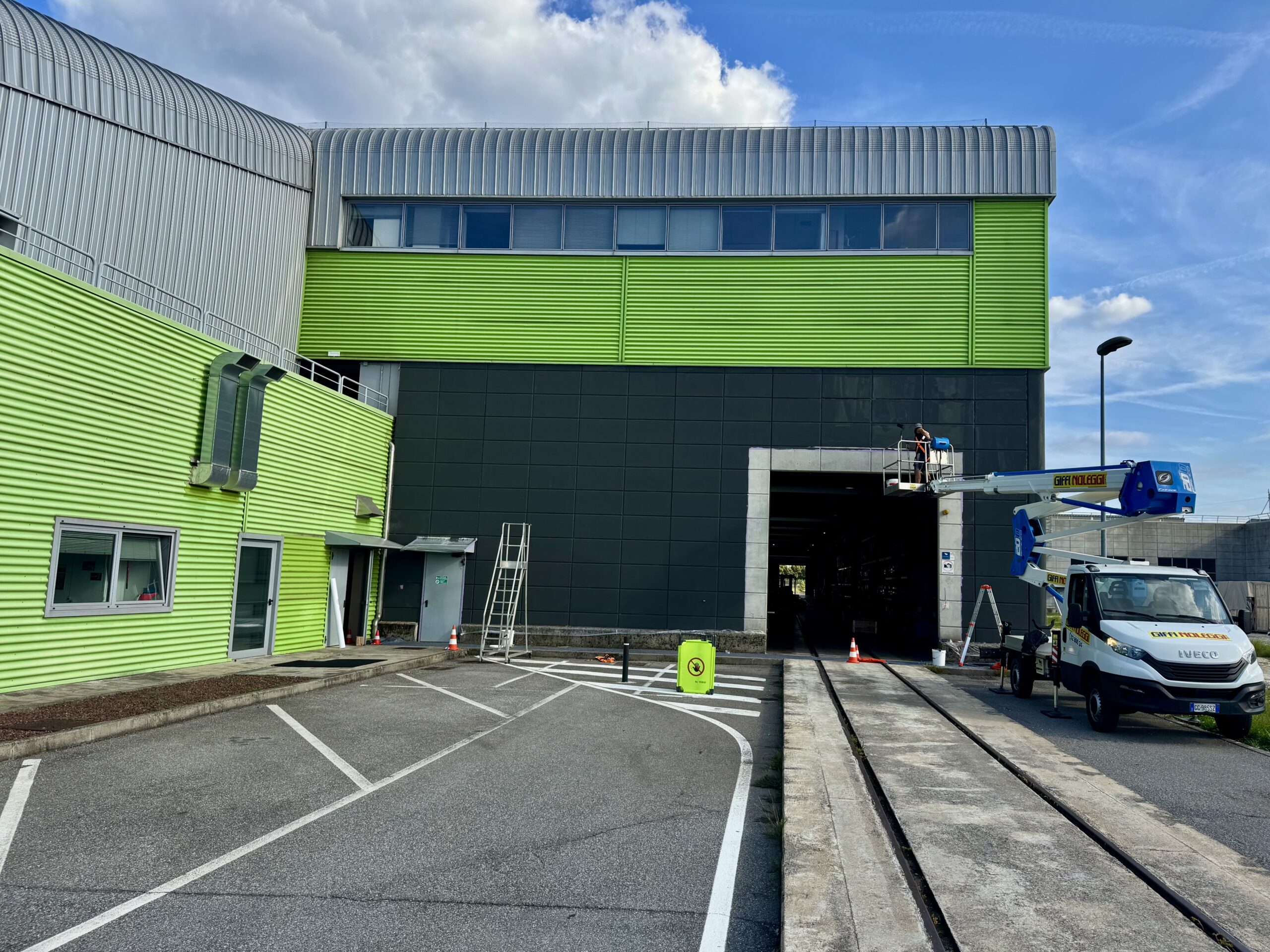
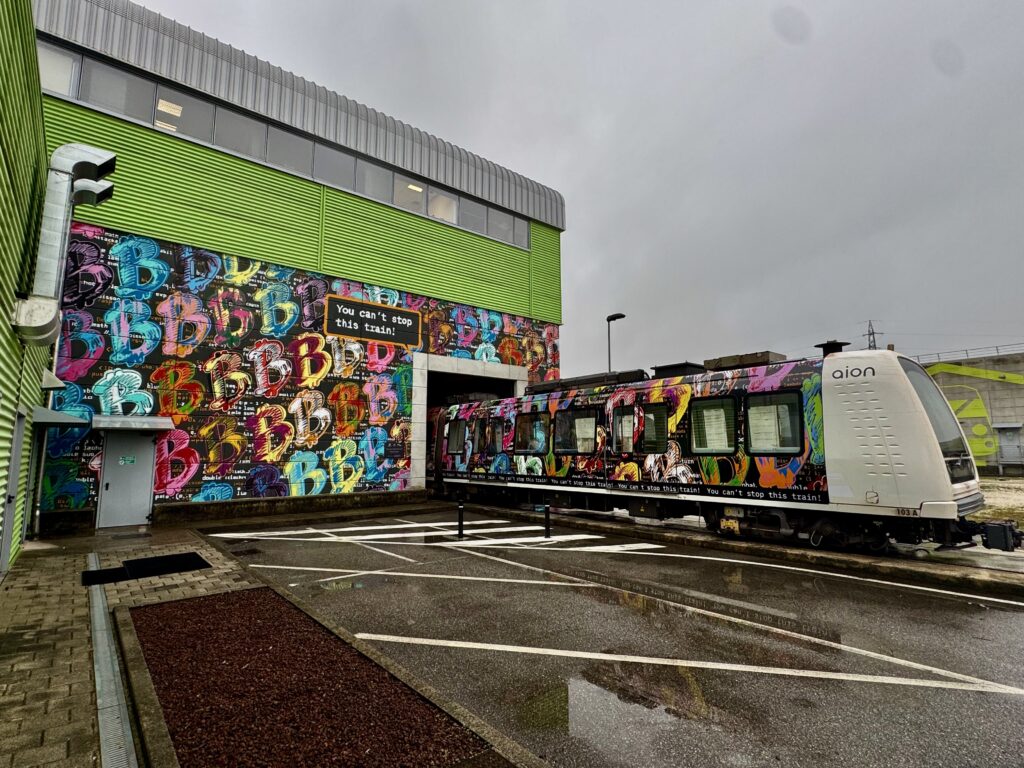
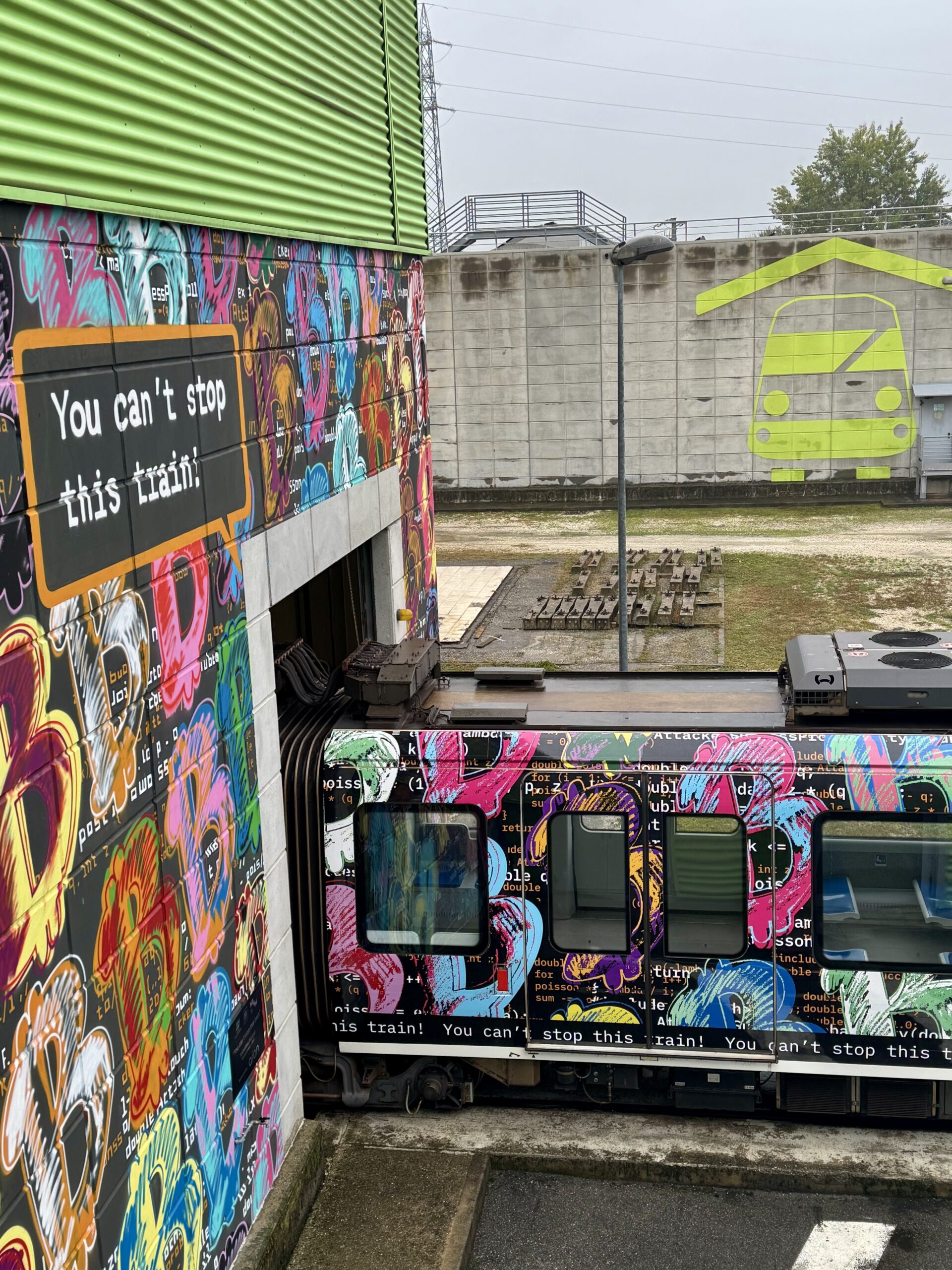
Meanwhile, a team of Swiss muralists, precision-driven, almost surgical, arrived in Brescia. Their task was to translate Valentina’s cyberpunk grammar onto the massive wall inside the metro depot. No room for error. The mural had to align perfectly with the train’s graphic skin. Two surfaces, one story.
Then came the Japanese technology: an advanced protective nano-coating, the kind used for infrastructure in high-salinity environments. Bitcoin art meets Japanese engineering. Because if a wall is going to carry the Satoshi Code, it should be built to last.
Remote coordination, parallel workflows, countless files exchanged, calibrations, measurements, test prints, approvals, corrections.
A choreography where everyone moved in sync, even if no one was on the same continent.



I’ve built brands, products, campaigns, but orchestrating a full Bitcoin metro train is in a category of its own.
When the train finally rolled out of the depot
There is a moment I won’t forget.
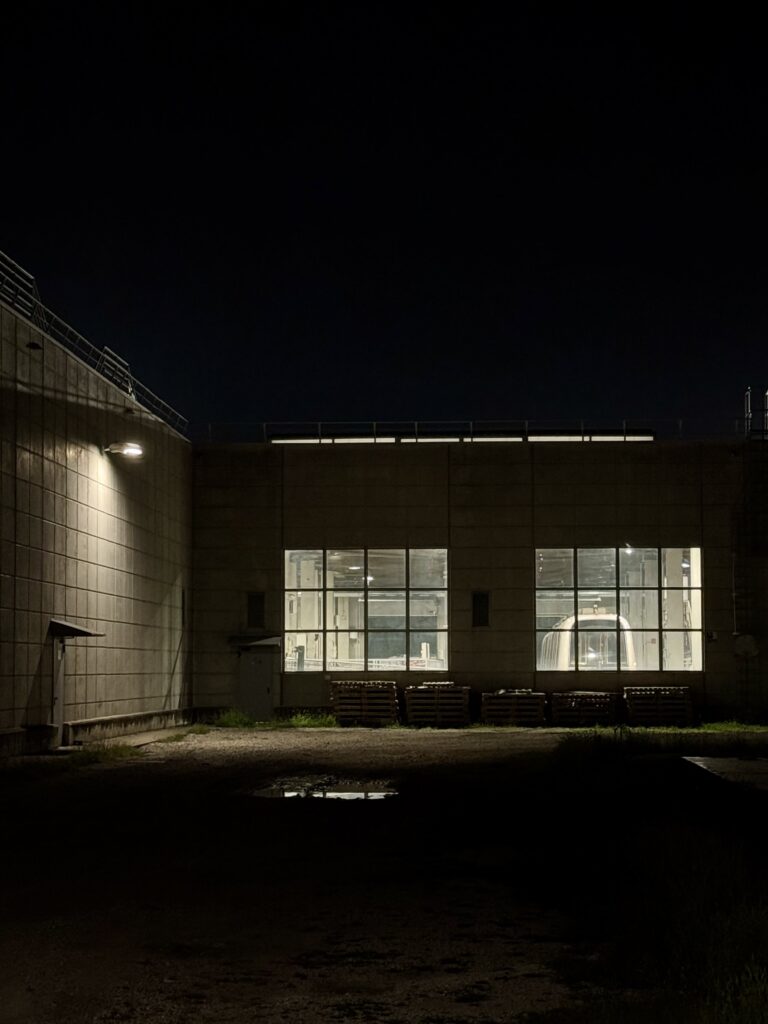
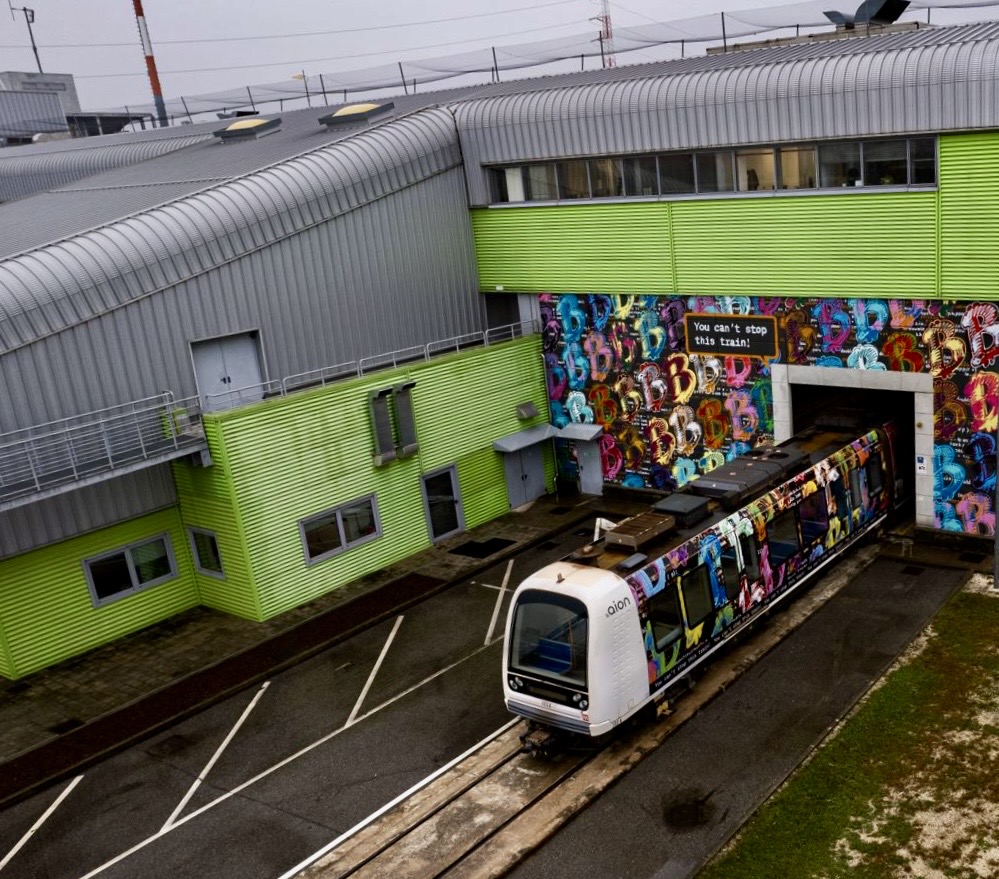
The depot lights cut through the metal cavern. The train emerged slowly, fully wrapped, the B symbol pulsing along the body, the algorithm running like a digital mural on wheels. The mural on the wall responded in silence. Two surfaces in conversation. One static, one kinetic. One physical, one conceptual.
A Bitcoin artwork that moves through a city thousands of times a week.
A decentralized idea embedded in centralized infrastructure.
This was not an exhibition.
It was a deployment.

The culture Bitcoin needed: not another marketplace, but a ritual
Blockchain has galleries now. Blockchain has fairs. Blockchain has museums and marketplaces.
But what it didn’t have, until now, was a public, civic-scale Bitcoin artwork attached to real urban mobility. Something that isn’t locked behind a wallet, a screen, or a collectors’ circle.
Bitcoin is a public protocol.
Its art should be public as well.
That was the spirit of the collaboration with Valentina Picozzi and the Satoshi Gallery: a collective that treats aesthetics as operational tools, not decorative assets. Their work is not commentary on Bitcoin. It is Bitcoin thinking, encoded visually.
With You Can’t Stop This Train, Valentina pushes that language into infrastructure. I simply made sure the machine could run.
From the Bronx to Italy to the blockchain
Street culture invented decentralized publishing. Bitcoin expanded that logic into economics.
MUM bridges them in a hybrid zone where art, mobility, and cryptography collapse into each other.
This project took:
A concept born globally.
A digital production timeline running from Bali.
Swiss precision on a metro wall depot.
Japanese protection tech sealing the whole operation.
A city ready to accept a cultural mutation.
An artist capable of narrating the future.
A visionary sponsor aion to make it possible.
And a train: unstoppable by design.
This is only the first node
The Bitcoin train in Italy is not an isolated artwork.
It’s a proof-of-concept.
It confirms what I believed when MUM was still just an idea:
the next museums won’t be building: they will be infrastructures.
Places you don’t enter, but that pass through your daily life like block after block.
The first Bitcoin metro is now part of that network.
It moves. It signals. It transmits.
And no matter how you feel about Bitcoin, art, or the future that is arriving faster than expected, one thing is certain.
You really can’t stop this train.