
FRONTIER INTELLIGENCE DOSSIER · UPDATED JULY 2026
Who controls the AI stack
Sovereign AI is becoming an investable thesis. Models are only one part. Control also depends on compute, energy, data, orchestration, deployment rights and the people who can run the system.
This dossier tracks the companies and capital behind that control. It asks where autonomy creates durable demand—and where “sovereign” is only a label on commodity infrastructure.
The Sarteri thesis
Access to intelligence will be common. Governed intelligence will be scarce. The winners will combine strong performance, jurisdictional control, auditable supply chains, portable deployment and sound economics. Control without quality is expensive symbolism. Quality without control is dependency.
Dossier 01 — Mistral Compute: an integrated European AI stack
In June 2025, Mistral AI announced Mistral Compute, a private, integrated AI infrastructure offering that extends from GPU hardware and orchestration to APIs, models and managed services. The company framed it explicitly as an alternative to an AI infrastructure market concentrated among a handful of global platforms.
The strategic move is vertical. A model provider becomes an operator of the environment in which models are trained, adapted, governed and deployed. For governments, research institutions and regulated enterprises, that changes the procurement question from “Which model should we use?” to “Which intelligence stack can we control?” Mistral says the platform is intended to serve organisations seeking ownership of their AI environment from bare metal through platform services, with tens of thousands of GPUs planned and NVIDIA as a partner.
Why it matters to capital
- Demand is institutional: sovereignty requirements are strongest where procurement budgets, regulation and national-security priorities overlap.
- Integration can create defensibility: the value is in coordinating hardware, software, models, security and support—not in reselling GPU hours.
- Geography becomes product architecture: data residency, local operations and jurisdictional continuity are features, not compliance afterthoughts.
The risk is capital intensity. Sovereign infrastructure must sustain high utilisation, rapid hardware refresh cycles and competitive developer experience. The investment test is therefore whether strategic demand produces long-duration commitments rather than politically attractive but underused capacity.
Dossier 02 — Nscale: financing the AI infrastructure industrial cycle
In March 2026, Nscale announced a $2 billion Series C led by Aker ASA and 8090 Industries at a stated $14.6 billion valuation. The company describes a vertically integrated platform spanning GPU compute, networking, data systems and orchestration, with participation or support from strategic and financial institutions across the infrastructure stack.
The round is evidence that AI infrastructure is being financed more like an industrial system than a conventional software category. It combines venture-scale upside with project finance, power access, supply-chain execution and customer concentration risk. Nscale’s separate work on UK sovereign AI infrastructure with BT illustrates how telecom assets, national data requirements and accelerated compute can converge.
What to underwrite
- Power before processors: contracted energy, grid access and cooling capacity increasingly determine time to revenue.
- Customer quality: take-or-pay structures and sovereign or enterprise commitments matter more than headline capacity.
- Stack control: orchestration and managed services can protect margins when raw compute pricing normalises.
- Residual-value risk: financing structures must survive fast changes in accelerator performance and workload efficiency.
The sovereign AI value chain
A sovereign system needs five layers: energy and sites; chips and networks; secure cloud and orchestration; models and private data; governance and operating talent. A weak layer can hand control back to an outside provider. The best opportunities often sit between layers.
Signals I am watching
- Long-duration national and enterprise compute contracts with disclosed utilisation economics.
- Regional accelerator supply chains and credible alternatives in networking, inference and specialised silicon.
- Private model adaptation on proprietary scientific and industrial datasets.
- Energy infrastructure purpose-built for dense, dispatchable AI workloads.
- Governance systems that make model provenance, access and policy auditable.
Related SARTERI research
- The Sovereign Intelligence Manifesto — the foundational argument for intelligence as civilisational infrastructure.
- Frontier Intelligence — curated primary-source signals and original interpretation.
- Frontier Capital Signals — July 2026 — the latest capital and technology briefing.
From the Journal
Related Journal
Selected field notes, essays and documented projects connected to Sovereign AI & Compute.

The Sovereign Intelligence Manifesto
Sovereign Intelligence is Sarteri’s framework for a technological future shaped by distributed agency, conscious progress and freedom from unavoidable dependence. It connects AI, finance,…
Davos 2026: Loud AI. Quiet Brain Revolution.
At Davos 2026 everyone talked about AI. Bigger models, faster deployment, geopolitical stakes. But in quieter rooms a different shift was unfolding. Leaders from…

AI Is Not the Future of Humanity. Consciousness Is. From Federico Faggin to Emotitech
Federico Faggin was ahead of his time when he invented the microprocessor, before computers mattered to the world. Today, he is ahead again. While…

Speed Is Not the Enemy and Slowing Down Won’t Save Us
Speed is not the problem. Our refusal to measure, understand, and guide complexity is. As technology accelerates, slowing down does not protect humanity, it…
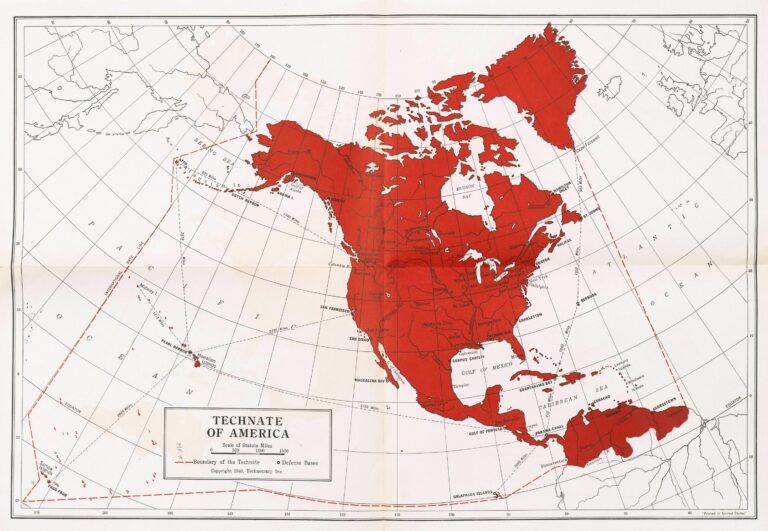
Technocracy Reloaded
A Gray Dream in a Hungry NationIn December 1919, a lean engineer named Howard Scott gathered a dozen scientists in a Manhattan loft and drew a…

“Humanize AI”, Brunello Cucinelli & Silicon Valley Giants
At the “Second Symposium on Soul and Economics in Solomeo Italy,” the honorary degree awarded by the University of Perugia to Reid Hoffman the…
Independent analysis by Lodovico Minelli Sarteri. Companies are discussed for research purposes; inclusion does not imply an advisory relationship or investment recommendation. Primary-source claims are linked in the text.