
PROOF OF CULTURE · ART / CRYPTOGRAPHY / COUNTERCULTURE
Culture moves first
Art, code and counterculture often arrive before the market.
My work in technology and venture capital grew beside a long practice in art, public space, design and emerging media. Artists and independent communities often test new tools, identities and forms of ownership years before markets can name them.
This is not decoration. It is part of how I judge technology. It shapes what I build, what I watch and who I bring together.
The Sarteri thesis
Culture decides what people trust, want and remember. A technical breakthrough means little until it enters real life.
Why cultural intelligence matters
- It moves first. Subcultures reveal new behavior before consensus.
- It makes technology legible. Design turns a complex system into something people can understand and use.
- It opens new territory. Art, fashion, music and public space test sensing, new materials, identity and ownership.
- It keeps people in the frame. Attention, emotion and agency belong inside the technology thesis.
Selected practice and evidence
Public space, colour and material science
In Milan, I curated the artist selection for Zedz’s 1,500-square-metre transformation of the Corvetto overpass. Colour, geometry and a Japanese protective coating changed how the infrastructure looked and how long the work could last. Domus documented the project and my role.
That project began a longer study of colour, material and public space. The work later informed EMOTITECH projects in perception and advanced coatings.
Affective and multisensory technology
As CEO of EMOTITECH, I work with emotional design, multisensory science and affective technology. We study how sensing, AI, colour, sound and space can change the relationship between people and machines. Alto Adige Innovazione profiled the work.
The ethical question is blunt. A system that can read emotion can also exploit it. My work on adversarial fashion and emotional privacy asks what machines may sense—and what should remain ours.
Street art, institutions and public culture
My cultural practice began with street art and graffiti. They showed me how ideas move from the margin to brands, cities and institutions. Exibart traces this history, including the association I founded in 1999, the Street Art publication developed with Vittorio Sgarbi and projects linking Italian artists with museums abroad.
This practice extends to art in civic infrastructure. In Brescia, the Connessioni project with Luca Font brought colour, perception and augmented reality into the metropolitan system, using a daily public environment as a cultural interface. The project was covered by Giornale di Brescia.
From cryptography to the crypto economy
Before crypto became an asset class, cryptography protected privacy and made permissionless coordination possible. The market came later. The culture came first.
A compact lineage
- 1976 — public-key cryptography. Whitfield Diffie and Martin Hellman’s New Directions in Cryptography established a new architecture for secure communication between parties that had never shared a secret.
- 1980s — privacy-preserving digital cash. David Chaum’s work on blind signatures and security without identification showed how electronic payments could be authenticated without turning every transaction into surveillance.
- 1988–1993 — crypto-anarchy and cypherpunk. Timothy C. May’s Crypto Anarchist Manifesto and Eric Hughes’s A Cypherpunk’s Manifesto made cryptography part of a wider programme for privacy, autonomy and open networks.
- 1997–1998 — proof of work and distributed money. Adam Back’s Hashcash made computational cost publicly verifiable; Wei Dai’s b-money described an anonymous, distributed electronic cash system.
- 2008 — Bitcoin. The Bitcoin white paper combined earlier primitives into peer-to-peer electronic cash without a central operator. Its proof-of-work ledger also introduced a new public medium for scarcity, timestamping and collective memory.
When code became culture
Bitcoin matters beyond price. It made ownership, provenance and patronage programmable. It also gave artists a new material: the ledger itself.
This trajectory now spans on-chain generative art, collaborative creation, decentralized archives, tokenized cultural objects and experiments in cyber-patronage. MoMA’s blockchain work demonstrates collective creation and co-ownership, while Ars Electronica’s Proof of Art situated NFTs inside the longer history of digital art rather than treating them only as a market event.
My own curatorial interest follows that deeper thread: Bitcoin and blockchain as media for decentralized culture, new forms of provenance and public patronage. Metagraffiti articulated this direction through phygital collecting, cyber-patronage and art–technology collaborations.
Hacker Squats & Autonomous Networks Archive
A documentary archive of the places where people built their own networks before autonomy became a product category.
This archive follows hackmeetings, social centres, hacklabs, camps, BBS cultures and independent congresses. These places joined code with music, publishing and politics. They were laboratories, not trade shows.
Starter documentary index
- Chaos Communication Congress, Hamburg, 1984. The CCC archive preserves an early independent hacker congress where networking, copied “subversive” publications and technical experimentation were part of one culture.
- Hackmeeting Italy, 1998–present. A self-managed annual meeting of digital countercultures. Its distributed archive links editions across Italy, Spain, Bolivia and Mexico; the 2002 Bologna edition, for example, took place at the occupied TPO without sponsors or institutional labels.
- Trans Hackmeeting, Europe, 2018. The transnational gathering connected grassroots approaches to hacking and politics beyond national and linguistic borders.
- Living field index. Future entries will map autonomous hacklabs, social centres, temporary camps and the people, printed matter, sound systems and improvised infrastructure that made them possible.
Archive method
- Preserve public flyers, programmes, zines, maps, photographs, recordings and source links.
- Record oral histories and the social context around tools, spaces and local communities.
- Trace how ideas moved from squats and mailing lists into open-source systems, digital rights, Bitcoin and the commercial technology economy.
- Respect consent, pseudonymity and operational privacy; the archive documents culture without exposing people who chose not to be public.
Archive contributions. If you hold original flyers, photographs, recordings, zines or first-hand context from a hackmeeting, hacklab or autonomous technology space, contact me with the place, year and material you can document.
The network
Years of projects and field work have built a network of artists, curators, designers, musicians, founders, scientists and institutions. It spans graffiti, electronic music, fashion, contemporary art and digital culture across Europe, the United States, Asia and the GCC.
It is not a directory. Its value is knowing which voice belongs in the room—and which signal is only noise.
Signals I watch now
- Generative and agentic art as a test bed for human–AI authorship
- Spatial computing, public interfaces and multisensory environments
- Fashion, wearables, identity and technologies of emotional privacy
- Electronic music, synthetic media and new forms of collective presence
- Blockchain-enabled provenance, patronage and cultural coordination
- Colour, perception science and experience design in health, mobility and civic space
- Cultural intellectual property as a strategic layer for frontier ventures
Applications for founders, investors and institutions
This work matters when a market map is not enough:
- Cultural foresight: identifying early behaviours, communities and narratives around an emerging technology.
- Experience innovation: translating sensing, AI, materials and perception science into human-centred products and environments.
- Art–technology landscapes: mapping creators, platforms, institutions and investable infrastructure.
- Curatorial and positioning strategy: designing credible cultural programmes for ventures, brands, cities and institutions.
- Network activation: assembling relevant creative, technical and institutional perspectives around a serious mandate.
- Ethical adoption: testing how a technology affects attention, emotion, identity, agency and public trust.
Authorship and disclosure. Research and practice by Lodovico Minelli Sarteri. This page combines documented projects with first-person professional context. References are linked to the original or independent coverage wherever available. Cultural inclusion does not imply a current commercial relationship or endorsement.
From the Journal
Related Journal
Selected field notes, essays and documented projects connected to Proof of Culture.

Hong Kong for Streetwear, Art Basel, and a Secret Factory Run Into China
In March, I traveled to Hong Kong for a mission across ComplexCon, Art Basel, HKWALLS, and a one-day factory run into Dongguan through Shenzhen.…

Frank Gehry’s Passing, a Memory from North Orange Drive
As Los Angeles reflects on the loss of Frank Gehry, I find myself returning to an unexpected place. A warehouse at 925 North Orange…
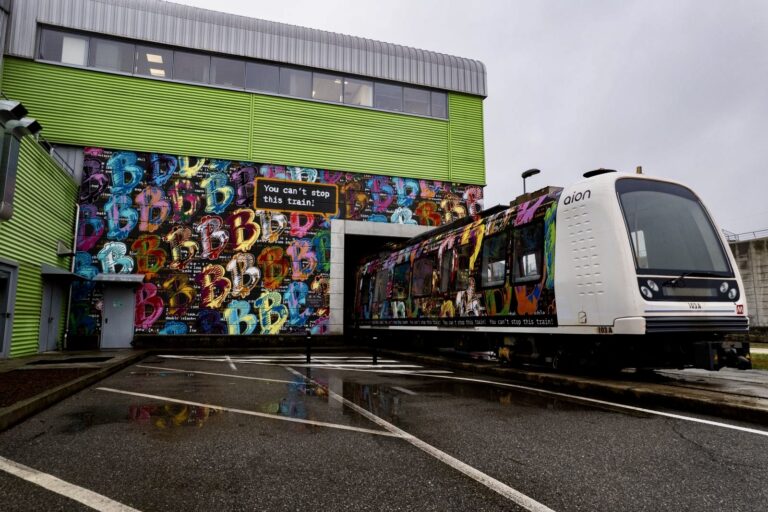
You Can’t Stop This Train: Backstage of the World’s First Bitcoin Art Metro
The world’s first Bitcoin art metro is alive. A moving cryptographic monument born between Bali, Switzerland, Japan and Brescia. You can’t stop this train.
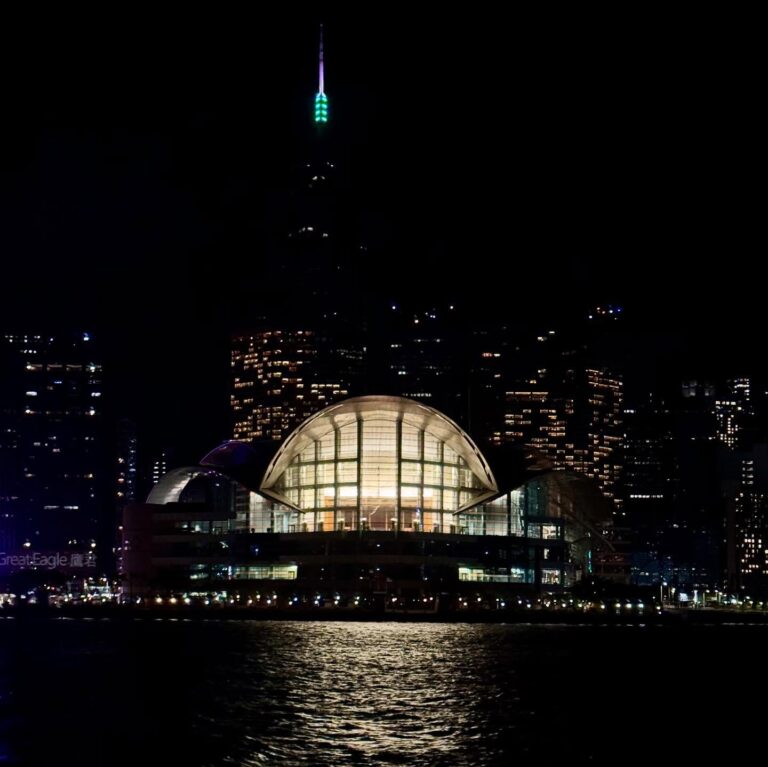
Clear Skies, Blank Walls, New Alliances
After the storm, Hong Kong shows its true surfaces. We spent four days walking with HK WALLS, scouting locations, measuring space, and turning conversations…
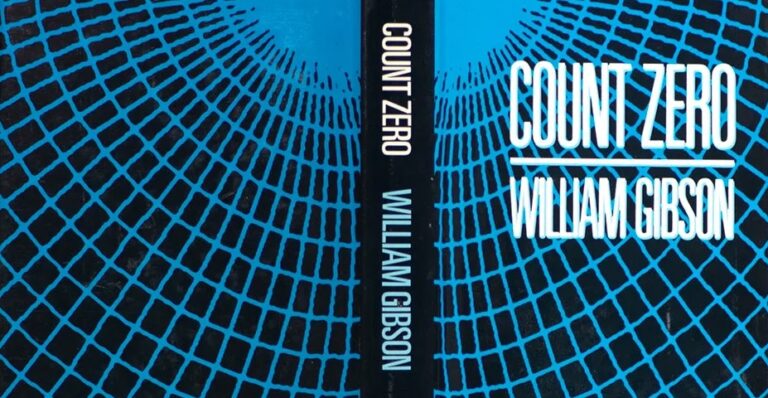
From Cyberpunk to Blockchain
In the dust of an old garage I found Count Zero again—William Gibson’s neon prophecy. The Gollancz edition glows with the blue globe lines…
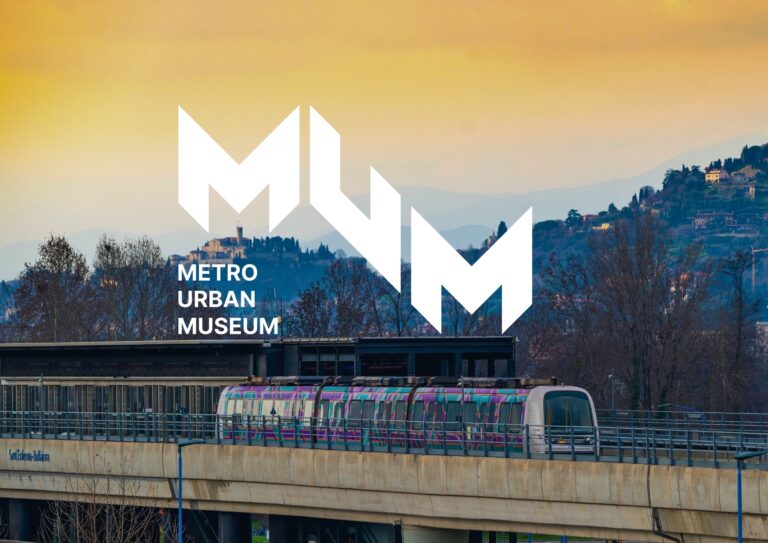
Metro Urban Museum, Peeta
I’ve always believed that public space is the most powerful—and most overlooked—canvas for cultural transformation. Not the sterile kind of culture locked behind velvet…