
FRONTIER INTELLIGENCE DOSSIER · UPDATED JULY 2026
Money becomes software
The next phase of digital finance is not about speculative tokens. It is about settlement, reserves, distribution, compliance and access. Stablecoins are becoming infrastructure.
This dossier tracks the businesses turning blockchain money into working financial rails. The focus is issuance, treasury, custody, payments and tokenised assets. Trust and distribution matter more than novelty.
The Sarteri thesis
This is not crypto versus banking. It is a new financial infrastructure built around internet-native liabilities. Winners will control a trusted asset, a regulated gateway or distribution. Without sound reserves, compliance and liquidity, technical novelty will not last.
Dossier 01 — Stripe and Bridge: stablecoins as a configurable product layer
Stripe’s acquisition of Bridge placed stablecoin orchestration inside one of the world’s most important internet-payments platforms. Its Open Issuance platform lets businesses create and manage their own stablecoins, configure cash and Treasury reserves, and use Bridge’s orchestration layer for conversion and interoperability.
The architecture is strategically important because it separates the stablecoin capability from a single branded coin. Issuance becomes a software primitive: businesses can embed their own liability, economics and user incentives while relying on an infrastructure provider for reserve operations and movement between assets. Stripe names BlackRock, Fidelity Investments and Superstate for Treasury management and Lead Bank for cash liquidity in the announced design.
By July 2026, Stripe was also highlighting Ramp’s use of Stripe for stablecoin payments and accounts. This illustrates the distribution flywheel: an incumbent financial-software network can bring stablecoin functionality to businesses that may never interact directly with blockchains.
Why it matters to capital
- Issuance is becoming modular: the business value shifts toward orchestration, compliance, reserve partners and distribution.
- Margins can migrate: issuers may share reserve economics with platforms and users, changing the competitive position of standalone coins.
- Interoperability is a moat candidate: the network that makes many branded liabilities behave as one usable balance layer can own valuable transaction flow.
The central risk is hidden complexity. A simple developer interface still rests on bank relationships, reserve segregation, redemption processes, chain security and cross-jurisdiction compliance. Investors should underwrite the entire liability chain, not only API adoption.
Dossier 02 — Tether Gold: tokenised reserves beyond the dollar
Tether reported in January 2026 that XAU₮ exceeded $4 billion in value and represented roughly 60% of the gold-backed stablecoin market. The company disclosed 520,089.350 fine troy ounces of physical gold reserves at the end of 2025.
In July 2026, Tether announced that XAU₮ received Shariah certification from Amanah Advisors. Tether says each token represents direct ownership of physical gold held in Swiss vaults, and that the review covered ownership, verifiable backing and the absence of interest, leverage and speculative derivatives.
The significance is not merely religious compliance. It shows how tokenised assets can be adapted to institutional rule systems and distribution channels. A reserve product can become a programmable collateral and savings instrument for markets where access, settlement speed and product structure matter as much as the underlying commodity.
What to underwrite
- Legal claim: what precisely does the token holder own, against which entity and in which jurisdiction?
- Reserve verification: frequency, independence and scope of assurance must match the scale of the liability.
- Redemption reality: minimums, fees, timing and operational access determine whether backing is economically meaningful.
- Distribution: wallets, exchanges, banks and institutional platforms decide whether a technically sound asset becomes liquid infrastructure.
The digital-finance stack
The stack has four layers: the reserve asset, the issuer, the networks that move the liability and the regulated points where users enter or redeem. Strong companies may span several layers. The risk still needs a clear address.
Signals I am watching
- Stablecoin integration by global banks, payment processors and enterprise treasury platforms.
- Reserve assurance moving from attestations toward full financial-statement audits.
- Purpose-built liabilities for commerce, savings, commodities and machine-to-machine payments.
- Regulatory passports that allow compliant products to scale across multiple jurisdictions.
- On-chain credit and collateral systems with enforceable off-chain rights.
Related SARTERI research
- Frontier Intelligence — curated primary-source signals and independent interpretation.
- Frontier Capital Signals — July 2026 — current capital and technology developments.
- The Sovereign Intelligence Manifesto — the broader thesis on strategic autonomy and infrastructure.
From the Journal
Related Journal
Selected field notes, essays and documented projects connected to Digital Finance & Stablecoin Infrastructure.
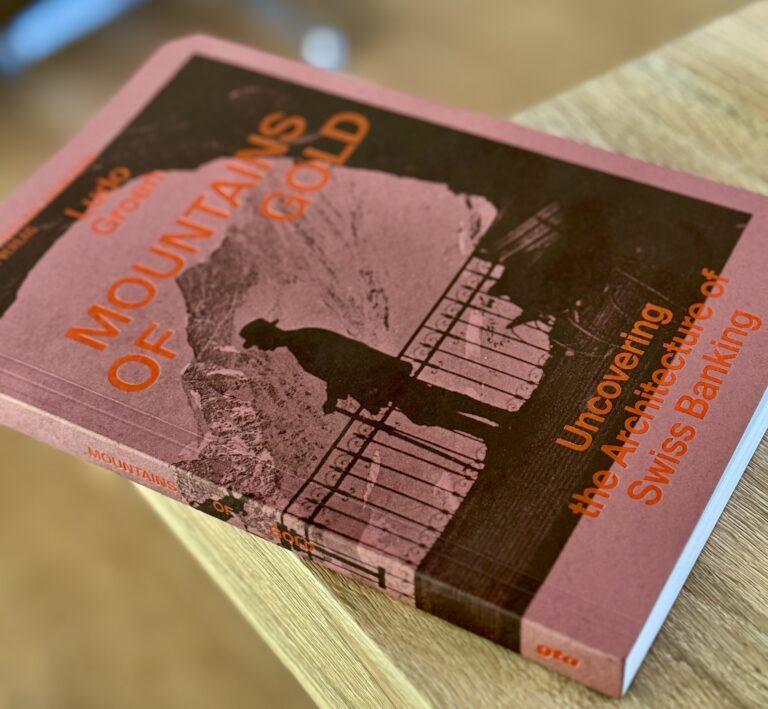
Mountains of Gold: The Secret Architecture of Swiss Trust
A journey through Alpine vaults, hidden tunnels, grand hotels, South African mines, Swissair routes and James Bond mythology, inspired by Ludo Groen’s Mountains of…

What Nobody Tells You About Visiting the World’s First Bitcoin Country
In January, I traveled to San Salvador to visit the world’s first Bitcoin country, attend the Plan B Forum, and explore the Zacamil renovation…

Eating Laksa with Binance CEO at TOKEN2049 Singapore
At TOKEN2049 Singapore, power was visible and fear was honest. I ate laksa with the CEO of Binance, listened to founders describe near-ruin, and…

fincluse
A concise, resonant, and mission-driven name designed for a new venture positioned at the intersection of financial inclusion, blockchain technology, and social impact. It…

From Alpine Roads to Global Wealth Management
Working with Kaiser Partner in Liechtenstein showed us a world that moves quietly and thinks long. Alpine roads, measured decisions, and lunches high above…

Impactista
Within the scope of this professional naming assignment, our client sought a distinctive appellation for an investment platform characterized by purpose and the pursuit…
Independent analysis by Lodovico Minelli Sarteri. Companies are discussed for research purposes; inclusion does not imply an advisory relationship or investment recommendation. Primary-source claims are linked in the text.