
FRONTIER INTELLIGENCE DOSSIER · UPDATED JULY 2026
A laboratory result is not a company
Deeptech is not software with a longer calendar. It needs technical judgment, staged capital, industrial partners and a path from proof to production.
This dossier follows companies in quantum, energy, materials, robotics and aerospace. I focus on the milestone that changes a project from an experiment into a company investors can underwrite.
The Sarteri thesis
A strong core technology can open several markets. That is useful only if the company stays focused. The investor’s job is to find the milestone that makes the next round of capital rational, then build the scientific, industrial and financial support around it.
Dossier 01 — ZuriQ: architectural risk in quantum computing
On 28 July 2026, ETH Zürich spin-out ZuriQ announced a $25.5 million seed round led by Quantonation, with Forward.one, Extantia, Firgun Ventures and existing investors. The capital follows a $4.2 million pre-seed round and is intended to expand the team, research programme and chip fabrication.
ZuriQ is attacking a specific scaling constraint in trapped-ion quantum computing. Conventional systems often organise ions in one-dimensional chains connected through junction structures. ZuriQ uses Penning micro-traps and a static magnetic field to create a natively two-dimensional architecture in which ions can be repositioned more flexibly.
The company reports a working 3×3 demonstrator of nine individually controlled ions, developed with ETH Zürich, and says its chips were fabricated with Infineon. That combination—a physical demonstration plus a credible manufacturing relationship—is more valuable than a distant qubit roadmap alone. The financing is designed to move from nine-ion proof toward hundreds of qubits on a chip.
The investment question
- Architecture: does native two-dimensional control improve scaling without introducing prohibitive control, fidelity or thermal complexity?
- Manufacturability: can the Infineon process move from demonstrator chips to consistent devices at useful yields?
- Milestones: progress should be judged through controllable qubits, connectivity, fidelity, error budgets and useful workloads—not raw counts.
- Syndicate quality: specialist investors can help evaluate physics risk and finance the company across longer technical cycles.
ZuriQ illustrates a classic deeptech pattern: a venture-scale outcome depends on an architectural choice made before the dominant design is settled. That creates both genuine technical risk and asymmetric value if the architecture becomes the more manufacturable route.
Dossier 02 — Bluecore Energy: nuclear power as deployable hardware
Bluecore Energy emerged from stealth in July 2026 with approximately $10 million in financing led by Slauson & Co. The company is developing water-cooled small modular reactors designed to operate on floating barges and deliver power to ports, critical infrastructure, data centres and, eventually, maritime propulsion.
Bluecore says it has delivered its first barge and electric test reactor to its Port of Long Beach headquarters. Its initial concept is a 10 MWe system that can be deployed in multiples. The strategic idea is not a new reaction pathway; it is a different deployment model for established nuclear engineering—manufacture centrally, move the generation asset by water and serve locations constrained by grid timelines.
What to underwrite
- Licensing pathway: nuclear, maritime and local approvals must form one executable sequence rather than three separate aspirations.
- First-market discipline: ports or data centres need clear willingness to contract before cargo propulsion expands the mission.
- Fabrication economics: modularity matters only if production, fuelling, security, maintenance and decommissioning are standardisable.
- Capital stack: venture equity must eventually be complemented by strategic customers, government programmes, project finance and insurance.
The case exposes a central feature of deeptech: a $10 million round can validate a team, prototype and regulatory programme, but it cannot finance commercial nuclear deployment. The investable question is whether each technical milestone unlocks a materially larger and lower-cost pool of capital.
A practical deeptech underwriting framework
- Define the irreducible technical claim. State exactly what must be true for the company to win.
- Separate physics risk from engineering risk. They require different evidence, talent and capital.
- Map the milestone-to-capital ladder. Every round should purchase a result that expands strategic choices.
- Test manufacturing early. A laboratory result is not a supply chain.
- Identify the first credible customer. The best beachhead validates more than revenue: it validates regulation, integration and reliability.
- Build the coalition. Deeptech companies often require investors, universities, industrial partners and governments to move in sequence.
Signals I am watching
- Specialist funds forming around quantum, nuclear, defence and industrial biology.
- State capital acting as customer or co-investor rather than only grant provider.
- Industrial incumbents opening fabrication, certification and distribution to frontier startups.
- New project-finance structures for first-of-a-kind commercial assets.
- Technical milestones reported with enough specificity for independent evaluation.
Related SARTERI research
- Frontier Intelligence — curated first-hand signals from companies and investors.
- Frontier Capital Signals — July 2026 — the current monthly briefing.
- Sovereign AI & Compute — infrastructure and strategic autonomy.
From the Journal
Related Journal
Selected field notes, essays and documented projects connected to Deeptech Venture Capital.
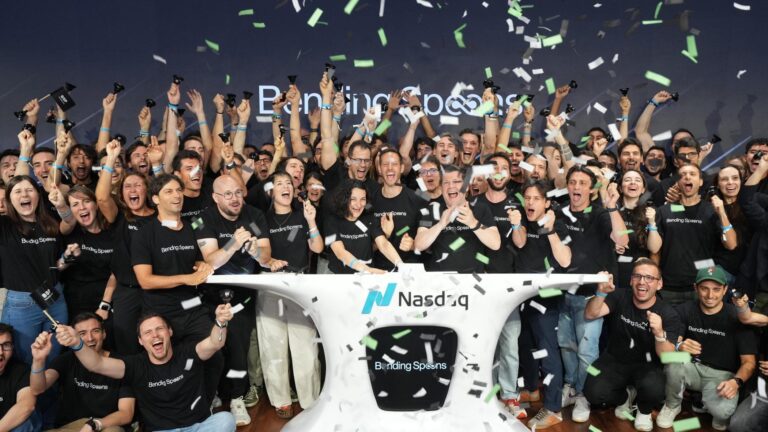
The Italian Machine Buying Silicon Valley, One Fallen Icon at a Time
A raw Sarteri analysis of the ownership, financial architecture and operating system behind the Italian company buying some of the internet’s best-known names. On…

Signals in the Noise: CES 2026 and a Lamborghini in the Desert
CES is not about finding the next big gadget, but about learning how to listen. Among the noise of Las Vegas, the most meaningful…
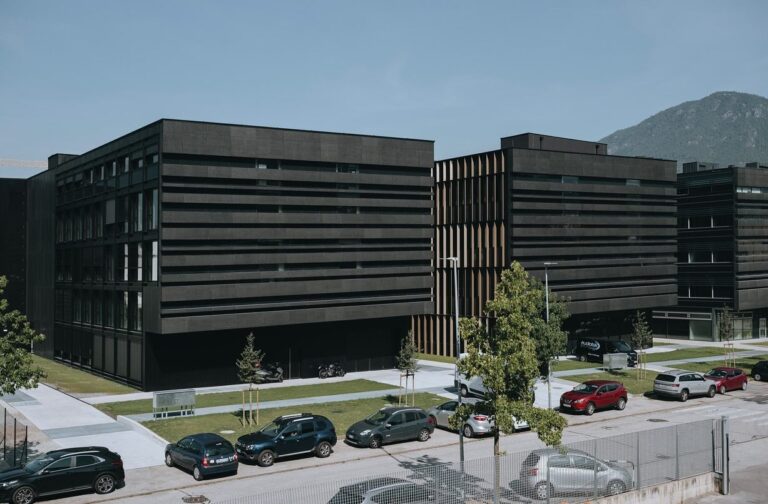
Building EMOTITECH: From Alpine Stealth to a New Intelligence Layer for Human Emotion
For more than two years, I have been quietly building EMOTITECH from the European Alps, inside NOI Techpark in South Tyrol, a crossroads of…
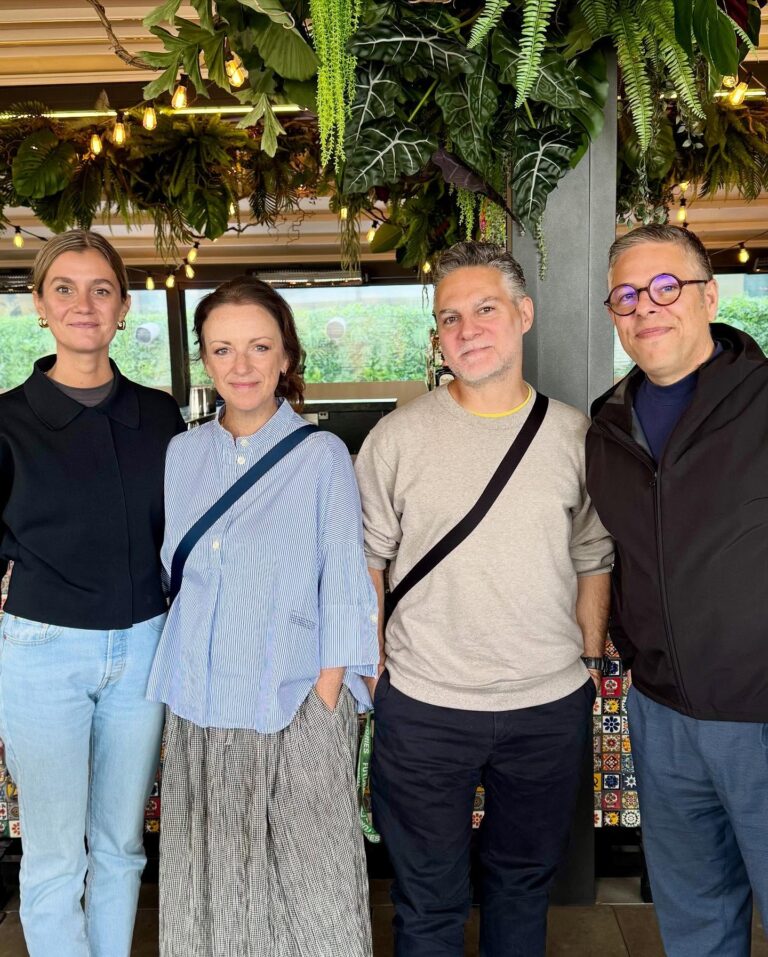
Between Brain Science and Blocked Trains in London
Two days in London. A neuroscience lecture that sharpened perspective, transportation strikes that forced long walks, and dinners with friends building global lives in…
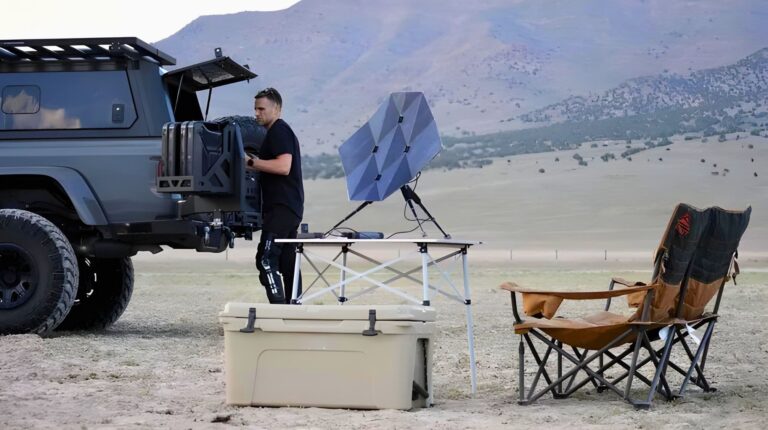
The Grid Just Died: a Backpack to Stay Powered
Just imagine one day you wake up and the electricity grid is off, nothing works. The lights are cold. The fight is on, but…
Denuclea
PROJECT TYPE: Industrial & Environmental NamingCLIENT: Confidential (nuclear decommissioning and waste management company)DELIVERABLE: Strategic naming + positioning rationale + digital checks 1. Client Brief…
Independent analysis by Lodovico Minelli Sarteri. Companies are discussed for research purposes; inclusion does not imply an advisory relationship or investment recommendation. Primary-source claims are linked in the text.