The death of Frank Gehry arrives with a strange sense of dislocation. His buildings always seemed animated from within, as if they were thinking structures rather than inert forms. Now that he is gone, the spaces he shaped feel even more charged, like instruments still vibrating from the last note played.

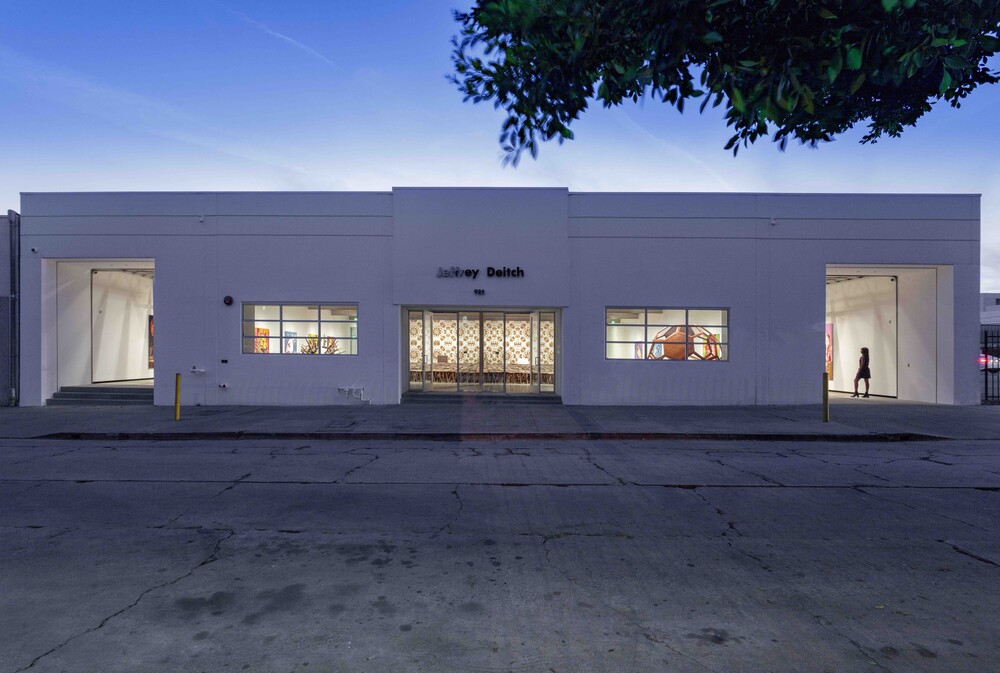
One of those spaces has been resurfacing in my mind these days. Not one of his iconic monuments, but a long warehouse on North Orange Drive in Hollywood. In 2018 it was nothing more than an industrial shell, waiting for its next identity. Jeffrey Deitch had chosen it as the site where he would crystallize his return to Los Angeles after leaving MOCA LA. But this was not a simple return. Jeffrey was consolidating a new presence in the city, and the move felt deliberate, strategic, almost cinematic. He approached Los Angeles as someone who had never really left, yet he carried the boldness of a figure ready to redraw the field.
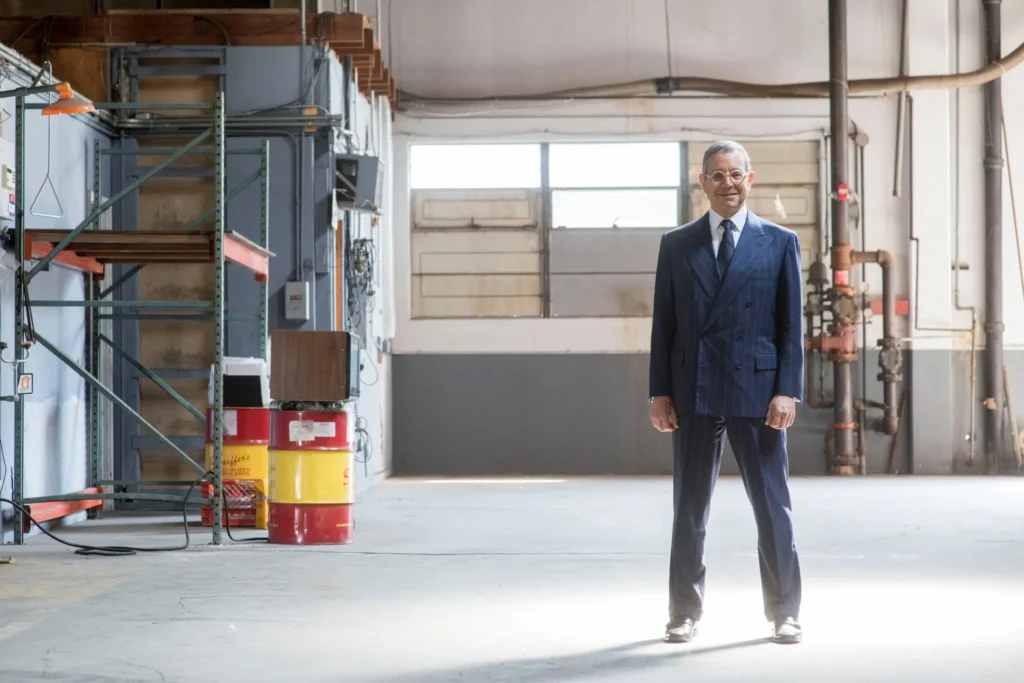
My connection to that moment runs through my dear friend Ethel Seno, who coordinated the project with a sensitivity that rarely gets mentioned in the public record. Walking through the unfinished space with her, I felt the subtle intelligence of a Gehry building before the details were resolved. There was a clarity to it: glass that dissolved the threshold between inside and out, concrete floors with the quiet authority of a studio, and those curving wooden beams that held the air like a suspended gesture. It was Gehry with the volume turned down, which made the precision even more apparent.

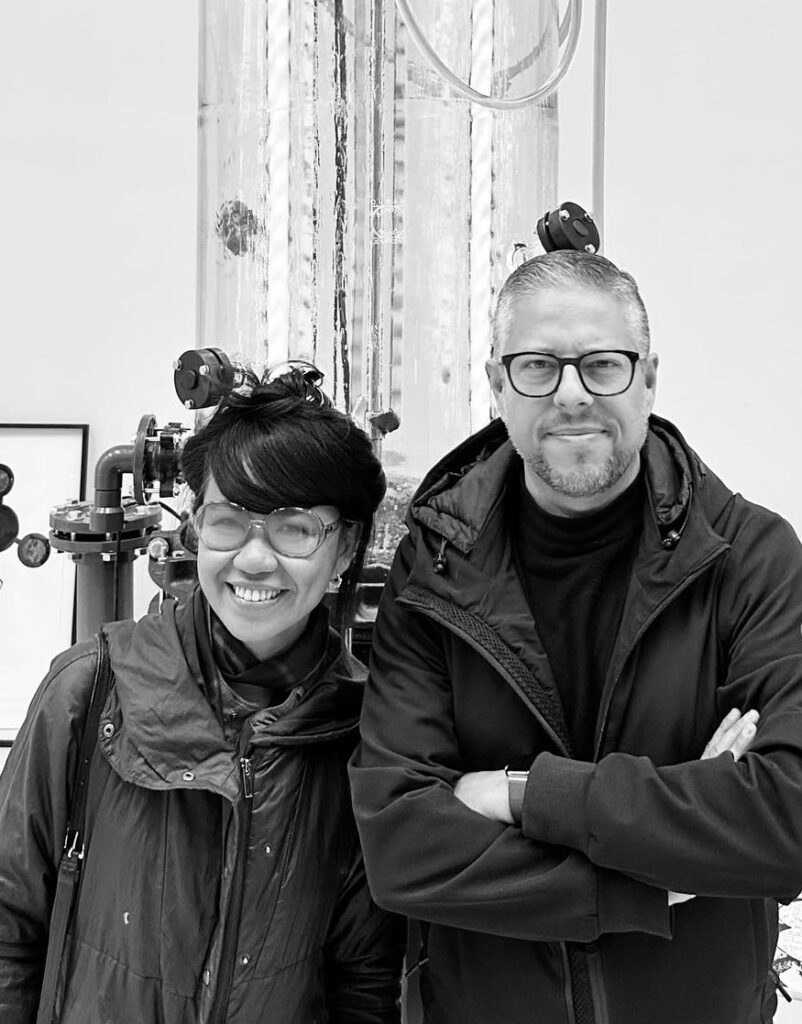
Jeffrey and Gehry understood each other in an unusual way. Their conversations were not about decorative decisions or architectural theatrics. They were about energy, flow, and the psychology of entering a space. How should a visitor feel at the door. What should unfold in the body as they move across the room. How can a gallery remain open and democratic without losing intellectual rigor. These were the questions shaping the structure long before the first exhibition was installed.

When the gallery finally opened, Ai Weiwei filled the space with thousands of antique Chinese stools. They stood like a dispersed assembly of witnesses, each carrying the long memory of a household. Gehry’s architecture did not overpower them. It acted more like a field of attention, amplifying their presence without adding noise. The encounter between Ai’s work and Gehry’s design revealed a harmony that was not planned but emerged naturally from the logic of the building. That was always true for other exhibitions that came after.

Looking back, that collaboration between Gehry, Deitch, and the often invisible work of people like Ethel captured something essential about Los Angeles at that time. The city was not simply a backdrop for art. It was a testing ground, a place where new forms of cultural expression could be sketched, abandoned, revised, and elevated.

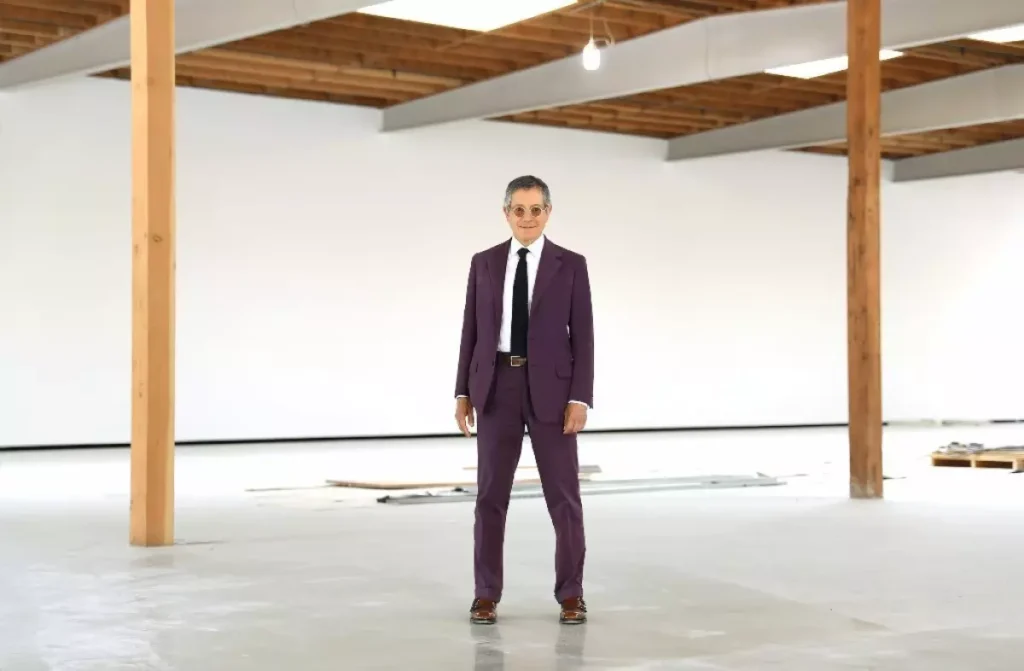
With Gehry’s passing, that old warehouse on North Orange Drive has taken on a new resonance for me. It reminds me that his architecture was never just about form. It was about potential. He had the rare ability to make even a bare industrial structure feel alive, as if waiting for the right idea to inhabit it.
Perhaps the most fitting way to remember Frank Gehry is to acknowledge how his spaces taught us to expect movement, contradiction, and possibility. He built environments that refused to settle, that always hinted at what could come next.
And in that warehouse, in that specific moment of Los Angeles, he left a quiet but luminous trace of exactly that spirit.