
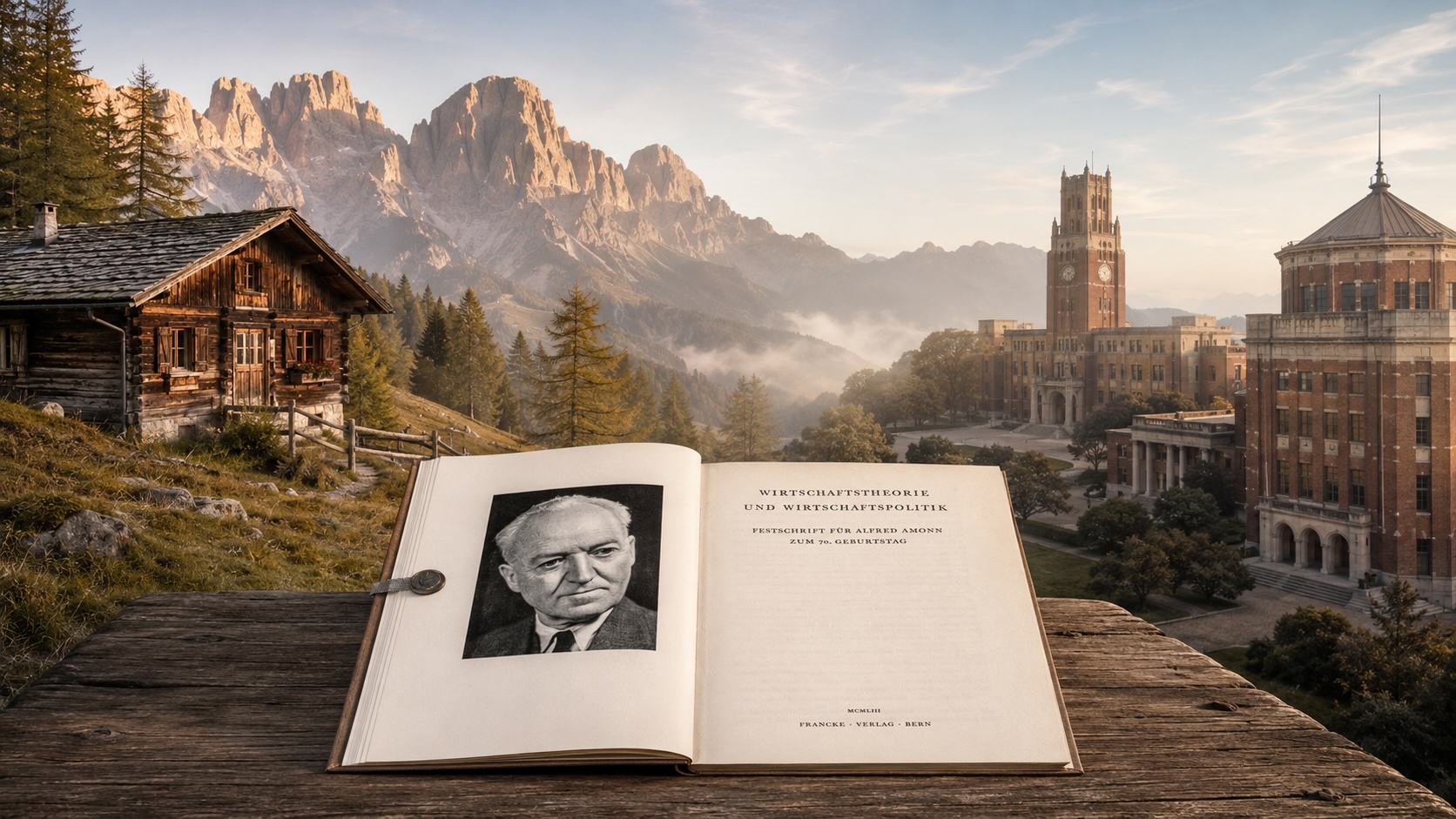
Alfred Amonn, the changing meaning of wealth, and one of my first bridges from the Alps to Asia

The room was cold enough to preserve silence. In an old cabin near Bruneck, the wind pressed against the wooden walls. The stove gave off the dry smell of larch. Snowlight entered through a small window and fell across a shelf of forgotten books.
Their cloth covers had faded. Dust gathered in the seams. When I opened one, the paper felt rough beneath my fingers and released that unmistakable scent of old libraries: leather, ink, smoke and time.
Outside, cowbells sounded somewhere below the forest. Inside, the pages whispered. Those books did not give me an answer. They gave me a trail. It led to Alfred Amonn.
The economist who began in Bruneck
South Tyrol is more than scenery to me. It is my childhood and, today, still my base in the Alps.
Growing up here teaches you to read small signals. A change in the wind. The weight of snow on a roof. The difference between a safe path and one that only looks safe. It also teaches you that remoteness is often an illusion. Mountain passes are not walls. They are invitations. Alfred Amonn understood this.
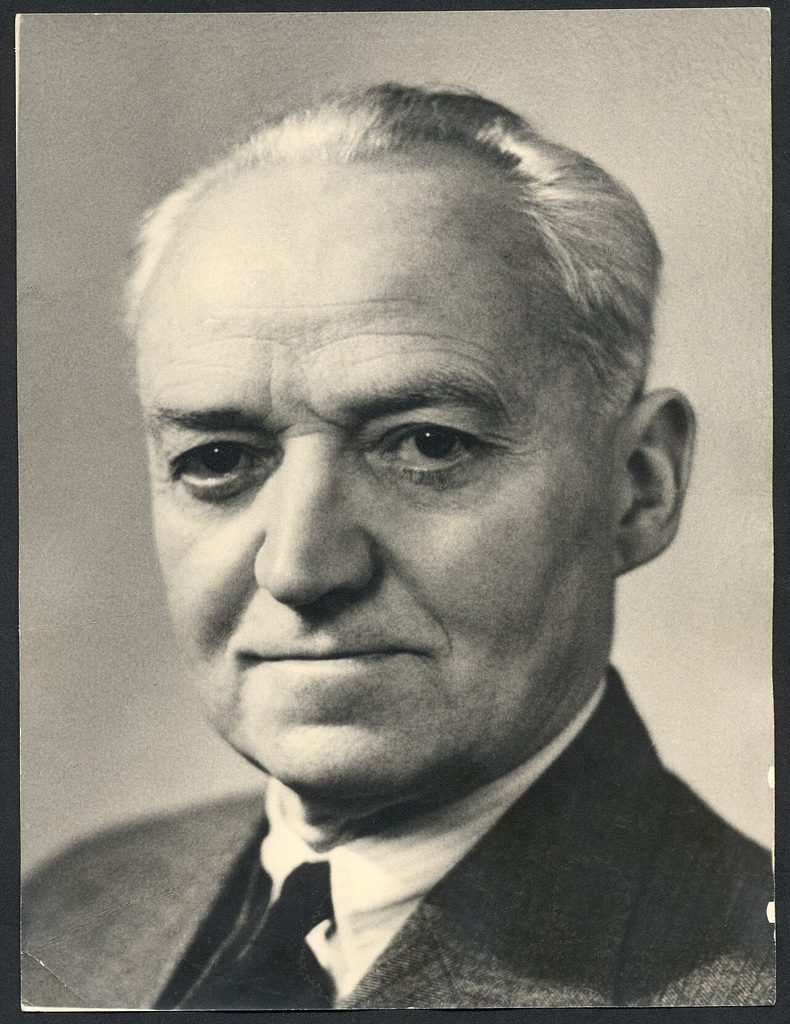
He was born in Bruneck in 1883, the son of a local merchant. After attending school in Brixen, he studied law and economics across Europe. His academic journey took him through Innsbruck, Munich, Vienna, Leipzig, Oxford and London. In 1911, he published Objekt und Grundbegriffe der theoretischen Nationalökonomie—The Object and Basic Concepts of Theoretical Economics. His biography reads almost like a map of European intellectual life.
Then the map opened east.
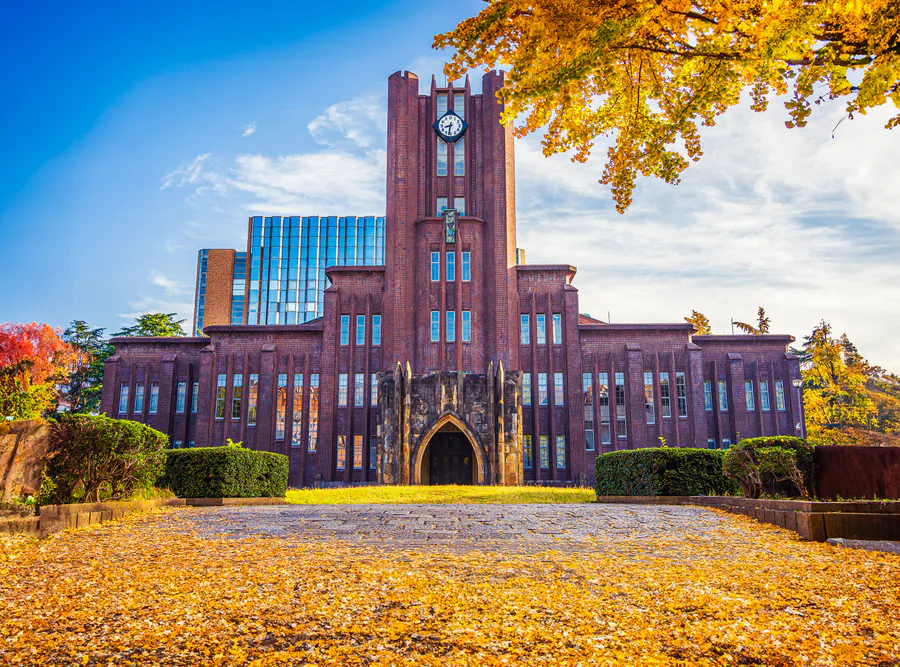
From 1926 to 1929, Amonn was a visiting professor at Tokyo Imperial University, today the University of Tokyo. The Historical Dictionary of Switzerland records those three Tokyo years as part of a career that later took him to Bern.
The University of Tokyo’s own archive makes the connection tangible. In December 1926, its economics journal published Amonn’s “Economic Theory and Economic Policy.” In 1928, it published his study of supply, demand, production costs, value and price. The titles remain visible in the university’s historical journal index. He was not passing through. He was teaching, publishing and participating in Japan’s developing conversation about modern economic theory.
For me, Amonn became one of the first intellectual bridges between the Alps and Asia. A man who began beneath the same mountains that shaped my childhood carried his questions all the way to Tokyo.
That matters to me. It says that origin is not a limit. A strong root can support a long reach.
What are we actually looking at?
Amonn’s most useful idea begins with an apparently simple distinction.
There is the thing we observe—the object of experience. Then there is the object created by the question we ask and the intellectual lens through which we examine it—the object of knowledge.
A market price, for example, is visible. It is data. But what are we trying to understand through that price? Scarcity? Desire? Productive capacity? Speculation? Social power? Trust? The number does not tell us which question we are asking.
Amonn wanted economics to remain a social science. Modern scholarship examining his work describes his effort to connect measurable prices with the human relationships that make those prices socially meaningful. A price was not simply a property hidden inside an object. It was an expression produced between people who exchange, compare and decide. The tension between price, value and social relations remains central to contemporary readings of Amonn.
This distinction feels even more important today.
Open a trading application and everything appears precise. A green number. A red number. A portfolio value calculated to the cent. The precision is real. The certainty is not. A price is a signal. It is not the whole of wealth.
Wealth is a process
In 1926, Amonn published Grundzüge der Volkswohlstandslehre. Its first part carried a revealing subtitle: Der Prozess der Wohlstandsbildung—The Process of Wealth Formation.
The important word is process.
Wealth is not merely a pile of objects or a number frozen on a balance sheet. It is formed through time. Through work, knowledge, coordination, institutions, natural resources and the ability to create something useful tomorrow.
The Alps make this easy to understand.
A forest is not only the price of its timber. A farm is not only the market value of its land. A cabin is not merely a number per square metre.
There is water management. Soil. Memory. Skill. Trust between neighbours. The knowledge of when to plant, cut, repair or wait.
Contemporary wealth accounting has moved in a similar direction. The World Bank’s Changing Wealth of Nations framework looks beyond financial figures and produced assets to human and natural capital.
Some of the most important wealth cannot be traded in a second. That does not make it less real.
Did Amonn anticipate Bitcoin?
The honest answer is no.
Amonn died in 1962, decades before Bitcoin, blockchains or programmable assets. We should not force a twentieth-century economist to predict a technology he never saw.
The more useful answer is that his questions survived.
Bitcoin’s original proposition was a system of peer-to-peer electronic cash without a financial institution standing between sender and receiver. Its protocol limits total issuance to 21 million bitcoin, creating a form of programmed scarcity. That supply rule is one of the system’s defining characteristics, as the project’s technical FAQ explains.
But scarcity alone does not answer Amonn’s deeper question: What kind of economic object is Bitcoin?
It can be examined as a payment system, a scarce digital asset, a speculative instrument, collateral, a store-of-value experiment or a network coordinated by software and human consensus.
The observable object may be the same. The object of knowledge changes with the question.
This is why arguments about Bitcoin so often pass each other without meeting. One person is discussing technology. Another is discussing monetary policy. A third is discussing price. A fourth is discussing political sovereignty.
They believe they are arguing about the same thing. Often, they are not.
A price is also a relationship
A bitcoin does not carry value in the way a stone carries weight.
Its economic value depends on relationships: between users, developers, miners, node operators, exchanges, custodians, regulators and the software rules participants choose to recognise.
This is not an argument against Bitcoin. It is an argument for looking more carefully.
Bank deposits, securities and national currencies also depend on relationships. The difference is that centuries of habit have made their supporting institutions almost invisible.
Digital assets expose the architecture.
They make us ask where trust is located. In a state? A bank? A company? A legal contract? A reserve account? Open-source code? A decentralised network?
Amonn would probably have appreciated the question more than the slogan.
Formally one thing, materially another
In a 1924 study of the new Czechoslovak currency, Amonn distinguished between its formal classification and its practical economic character. It was formally state-issued paper, he observed, but materially intended to function like bank money.
He then examined how money entered circulation, which assets stood behind it and whether the supply adapted to actual commercial activity. The original study is available through Open JSTOR.
That method transfers surprisingly well to electronic assets.
A token may be formally described as a currency but used mainly for speculation. A “stablecoin” may appear stable on a screen, yet its material character depends on reserves, redemption rights, governance and the solvency of its issuer.
A tokenised building is not the building. It is a digital representation of a claim whose value depends on contracts, custody and enforceable ownership.
An NFT may prove control of a token while conveying very different rights—or no rights at all—over the image to which it points.
Bitcoin is different again. It is native to its network rather than a digital receipt for an asset held elsewhere.
Modern institutions now make this same distinction. The OECD separates tokens representing off-chain assets from assets native to a blockchain, while the Bank for International Settlements defines tokenisation as recording a digital representation of an existing asset on a programmable platform. The BIS report also stresses that governance and risk management remain essential.
The label is the beginning of the investigation. Not the end.
Scarce coins, elastic claims
Amonn’s currency research contains another useful idea.
He distinguished between means of payment that expanded and contracted with commercial activity and forms of money creation that did not respond in the same automatic way. He looked beyond the total quantity and asked how each unit had been created.
Applied carefully—not literally—to Bitcoin, this produces an interesting distinction.
The supply of bitcoin at the base protocol is limited. But the financial claims built around bitcoin can expand: exchange balances, loans, derivatives, funds, wrapped tokens and other forms of exposure.
The underlying asset may be scarce while claims upon it multiply.
Scarcity does not abolish leverage. This is not a prediction that Bitcoin will succeed or fail. It is not a buy or sell recommendation. It is a reminder to distinguish the asset, the claim, the custodian and the price. They may appear together on one screen. They are not the same thing.
Five questions I took from Amonn
Before calling something wealth, I now find it useful to ask:
- What am I actually observing?
An asset, a price, a token, a legal claim or an entry in someone else’s database? - What does it do materially?
Does it provide payment, ownership, access, income, collateral or only the possibility of resale? - Which relationships give it economic force?
Network consensus, an issuer, a community, a court, a custodian or a promise of redemption? - How is its supply really created?
Through code, credit, monetary policy, new issuance or layered financial claims? - What remains if the price screen goes dark?
Productive capacity, legal ownership, knowledge, utility, community—or nothing?
These questions are useful for bitcoin, stablecoins and tokenised securities.
They are also useful for companies, currencies, real estate and, perhaps, our own lives.
The bridge remains
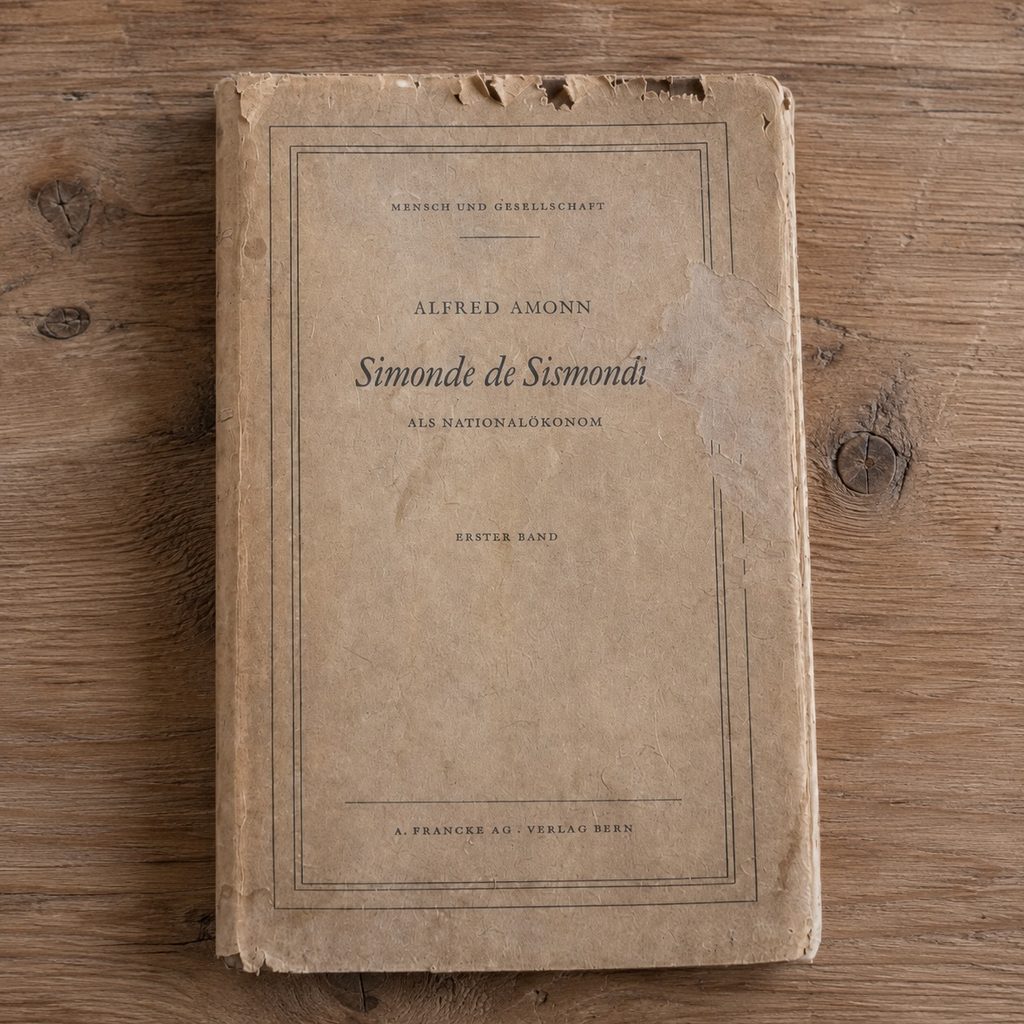
I think again of that cabin near Bruneck.
The smell of smoke in the timber. The grain of the old paper. The mineral cold entering whenever the door opened. The mountains standing outside without hurry.
Somewhere inside those books was a route from South Tyrol to Tokyo.
Amonn travelled it almost a century ago. He carried European economic theory east and returned with another horizon inside him. For someone whose childhood and present base are both in the Alps, that journey still feels quietly radical.
It tells me that the Alps and Asia are not opposite worlds. They are two ends of a bridge. It also tells me that old ideas do not need to provide modern answers. Sometimes their greatest value is that they improve our questions. What is an asset? What is a price? What is wealth? And what remains when the number changes?
The future of wealth may be digital, programmable and global. But wealth cannot be reduced to what glows on a screen.
Real wealth is the durable capacity to act: to preserve choice, create useful things, build trust, cross a bridge and return with a larger map.
The old books are still speaking. We only have to open them.